
Which Venice Vaporetto Pass Should You Buy?
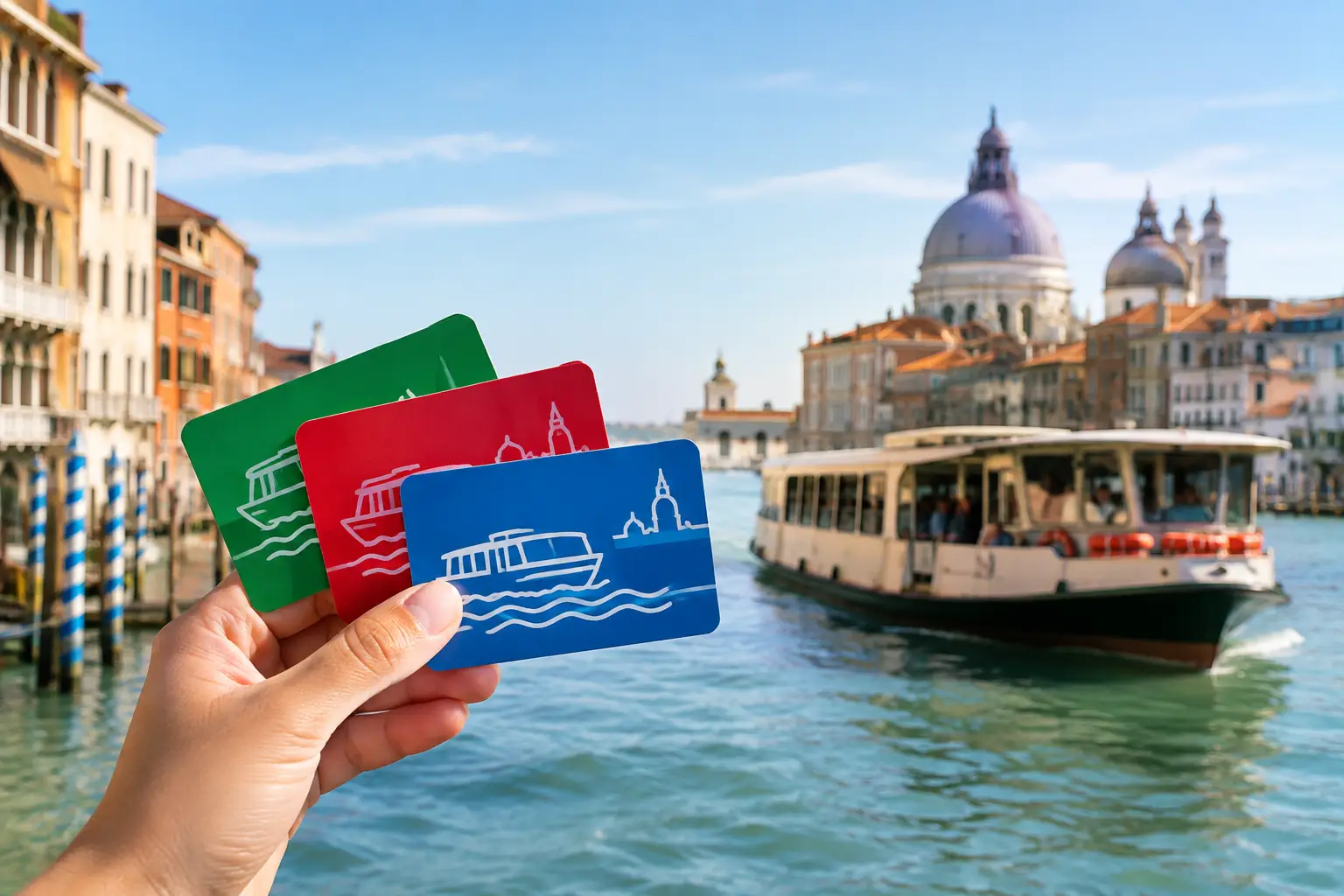
A vaporetto is not just a sightseeing boat in Venice. It is the everyday public transport network that takes you along the Grand Canal, across the lagoon and out to islands such as Murano, Burano and Lido. Choosing between Venice vaporetto passes before you arrive can make your plans easier – but only if the pass matches the way you will actually travel.
For most visitors staying two or more nights and planning to use the boats regularly, an ACTV time-based travel pass is usually the simplest choice. If you are in Venice for one night, staying close to Piazza San Marco or Rialto and only expect to make one or two crossings, individual tickets may be better value. The key is to count realistic journeys, not the journeys you imagine making while looking at a map.
What a Venice vaporetto pass covers
The standard visitor passes are issued for the ACTV public transport network. They cover Venice water buses, as well as ACTV buses, trams and people mover services where applicable. For a holiday focused on Venice’s historic centre, the water-bus element is what matters most.
Passes are commonly sold in 1-day, 2-day, 3-day and 7-day versions. Their validity is measured in hours from first validation, rather than ending at midnight. That can be especially useful if you activate a 24-hour pass at lunchtime and intend to use it again the following morning.
A pass lets you make as many eligible journeys as you need within that period. It works well for a stay split between central Venice and the islands, or for travellers who prefer not to walk the full length of the city several times a day.
It does not normally include private water taxis, gondola rides or Alilaguna airport boats. Airport transfers are a separate decision, so do not assume that an ACTV tourist pass will get you from Marco Polo Airport to your hotel. Check the current inclusions and route conditions when buying, as network rules can change.
When a pass is worth buying
A single ACTV water-bus ticket is valid for a limited period, often around 75 minutes, and fares are high enough that several boat journeys can quickly add up. A time-based pass starts to make sense if you will use the vaporetto more than a couple of times a day, particularly over several days.
It is a strong fit for these sorts of plans:
- staying in Cannaregio, Castello, Dorsoduro or around Santa Lucia station and using boats to reduce walking
- visiting Murano and Burano, which require lagoon crossings and connections
- staying on Lido and travelling into the historic centre each day
- arriving with children, luggage or limited mobility, when a boat can be more practical than navigating Venice’s bridges
A pass is less compelling when your hotel is central, your itinerary is concentrated around St Mark’s Square, Rialto and Accademia, and you enjoy walking. Venice is compact but not flat in the practical sense: bridges, narrow calli and crowds make distances feel longer. Still, many first-time visitors overestimate how often they will board a vaporetto.
Trav’s planning rule is simple: map your accommodation, airport arrival and one day of sightseeing before paying for transport. The right pass becomes clearer very quickly.
Choosing the right ACTV pass length
One-day pass
Choose the 24-hour option when Venice is a short stop on a wider Italian trip, or when you have a concentrated sightseeing day that includes the Grand Canal and an island visit. It can also suit cruise passengers with a long independent day ashore, provided their arrival point and return timings work with public transport.
It is not automatically the best answer for an overnight stay. If you arrive late and leave early, individual tickets may cover the only journeys you need.
Two or three days
For a typical UK city break, a 48-hour or 72-hour pass is often the most comfortable middle ground. It gives you freedom to take Line 1 along the Grand Canal, cross between districts when your feet need a break and visit Murano or Burano without calculating each ticket.
Pick 48 hours for two full sightseeing days. Choose 72 hours if you have three days in Venice, or if your arrival and departure times create meaningful extra use. Remember that the clock starts when you first validate the pass, not when you collect it.
Seven days
The 7-day pass is aimed at slower trips rather than a standard weekend. It can be worthwhile if you are staying on Lido, exploring the lagoon at an unhurried pace or using Venice as a base for several days. It is less likely to suit travellers spending part of the week in Florence, Verona or the Dolomites, as unused days do not create value.
Airport transfer: make this a separate choice
Marco Polo Airport sits across the lagoon from Venice, and the best transfer depends on where you are staying. The airport water-bus services can be convenient for waterfront stops and some central areas, while the bus to Piazzale Roma is often the practical public-transport option for hotels near Santa Lucia station, Cannaregio or the western side of the city.
From Piazzale Roma, you may then walk or take an ACTV vaporetto to your accommodation. If you have heavy cases and are staying deep within San Marco, Castello or Dorsoduro, compare the total number of bridges and connections before deciding. A door-to-door water taxi costs substantially more but can be sensible for families, late arrivals or travellers with mobility needs.
Treviso Airport is farther away and usually involves an airport coach into Venice rather than a lagoon transfer. Neither airport journey should be assumed to be part of standard Venice vaporetto passes.
How to use your pass without a ticket problem
Buy from an official sales point, ticket machine or approved seller, then follow the validation instructions supplied with the ticket or digital voucher. Physical passes generally need validating before the first journey, and you should keep the ticket with you throughout your trip. Inspectors do check, and not understanding the system is unlikely to help if your pass has not been activated correctly.
At busy stops, look at the route number and final destination, not only the word “vaporetto”. Line 1 is the slower, scenic Grand Canal route, stopping frequently between Piazzale Roma and Lido. Line 2 is often faster for major points such as Rialto, San Marco and Giudecca, although routes can vary by season, time of day and operational changes.
For Murano and Burano, allow more time than the map suggests. These are not quick detours from St Mark’s Square, especially if you are travelling in peak summer or want to see both islands in one day. Check the live timetable at the stop on the day rather than building an itinerary around an assumed frequency.
Common mistakes to avoid
The most expensive mistake is buying a long pass “just in case” and then walking everywhere. Venice rewards walking: the quiet streets behind Campo Santa Margherita, the route through Cannaregio and the lanes around the Arsenale are often more enjoyable on foot than by boat.
The opposite mistake is relying on individual tickets while planning a full day of island-hopping. A few journeys can turn a cheap-looking plan into a costly one. Also avoid treating the vaporetto as a hop-on sightseeing cruise at peak times. It is public transport, and boats can be crowded around commuter periods and major stops.
Finally, do not leave your first ticket decision until you are tired at the airport or station. Decide whether you need an airport transfer and whether your first vaporetto trip should activate a pass before you travel.
A practical decision before you book
Choose individual tickets if you are making only one or two water-bus journeys. Choose a 48- or 72-hour ACTV pass if you are staying centrally for a city break and expect regular boat use, especially with a Murano or Burano day. Choose seven days only when you genuinely have a week in the lagoon or are based on Lido.
Once your accommodation is confirmed, use Ask Trav to compare the route from your arrival airport to the nearest useful stop and shape a transport plan around your actual check-in location. That is the point at which a vaporetto pass stops being a generic tourist purchase and becomes a useful part of a smoother Venice break.