
Rome versus Florence weekend – which suits you?
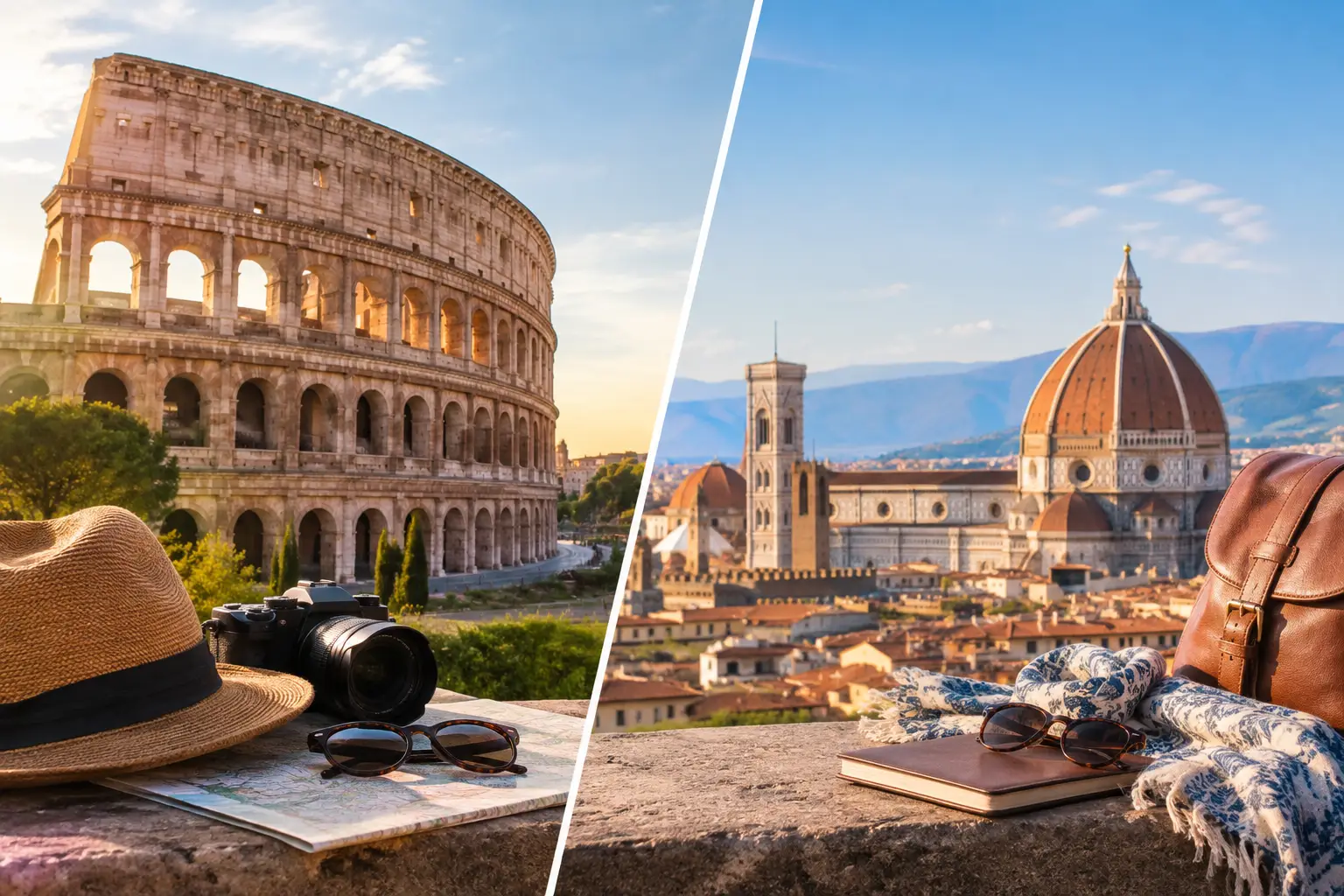
A Rome versus Florence weekend is really a choice between scale and focus. Rome gives you ancient landmarks, lively neighbourhoods and enough major sights to fill several returns. Florence is smaller, more walkable and easier to absorb over two or three nights, particularly if you want art, food and a slower Italian city break.
For most first-time visitors with a full weekend, Rome is the stronger choice if seeing the Colosseum, Vatican Museums and Trevi Fountain matters most. Choose Florence if you would rather spend less time crossing a city and more time wandering between the Duomo, Uffizi Galleries, Ponte Vecchio and dinner in Oltrarno.
Rome versus Florence weekend: the quick decision
Choose Rome if you want a high-energy break built around world-famous landmarks, Roman history and a wide choice of evening neighbourhoods. It suits couples, groups and repeat visitors who do not mind full days, busy pavements and planning ahead for headline attractions.
Choose Florence if you want a compact, culture-led weekend where the centre is largely walkable. It is particularly good for couples, art lovers, mature travellers and anyone who prefers one well-paced city over a long sightseeing checklist.
There is no wrong answer, but trying to see both on one ordinary weekend usually weakens the trip. The high-speed rail journey between Rome and Florence makes a twin-centre break possible, yet changing hotels consumes valuable time. Save both cities for a longer Italian holiday or add Florence to a Rome itinerary of at least four or five nights.
What your weekend will feel like
Rome is bigger, busier and more varied
Rome is not a neatly contained open-air museum. The historic centre stretches across a large area, and the Vatican sits on the opposite side of the Tiber from the Colosseum and Roman Forum. You can walk between many places, but you will cover serious ground and may use the Metro, buses or taxis between key districts.
That effort is rewarded with variety. A morning at the Pantheon can lead into lunch near Campo de’ Fiori, an afternoon in Trastevere and an evening around Monti or Testaccio. Rome works well when you accept that you will not see everything. Pick two major sights a day, leave room for getting lost, and reserve time for a proper meal.
The trade-off is crowding. The Vatican Museums, Colosseum and Borghese Gallery commonly need advance planning, especially during school holidays, Easter and the warmer months. A central hotel reduces travel time, but the most convenient locations can also be among the pricier options.
Florence is compact and concentrated
Florence offers a more contained weekend. From Firenze Santa Maria Novella station, much of the central sightseeing area is reachable on foot, including the Duomo, Piazza della Signoria, Uffizi Galleries and Ponte Vecchio. That simplicity can make a short break feel genuinely restorative rather than rushed.
The city’s strength is concentration. Renaissance art, architecture, galleries and food markets sit within a manageable area, while the Arno separates the historic core from Oltrarno’s workshops, wine bars and quieter streets. You can build a satisfying day around one major museum, a neighbourhood walk and a relaxed dinner without spending hours in transit.
Florence is not crowd-free. The area around the Duomo and Ponte Vecchio can be very busy, and timed entry for the Uffizi and Accademia is sensible when your dates are fixed. But compared with Rome, it is easier to step a few streets away and reset the pace.
Which city is better for your interests?
Rome wins for ancient history and landmark variety. The Colosseum, Roman Forum and Palatine Hill form a substantial archaeological area, while the Pantheon, Castel Sant’Angelo and the Vatican add very different chapters of the city’s past. It is also the better choice if this is your first Italian city break and you want an unmistakably grand introduction.
Florence is the clearer choice for Renaissance art. The Uffizi holds major works by artists including Botticelli and Leonardo da Vinci, while the Accademia is where visitors go to see Michelangelo’s David. Even outside museums, the city itself tells that story through the Duomo complex, Palazzo Vecchio and the churches around the centre.
For food, neither city needs to be framed as a contest. Rome is strong for traditional dishes such as carbonara, cacio e pepe and supplì, with excellent options across Trastevere, Testaccio and Prati. Florence is known for Tuscan cooking, bistecca alla fiorentina, ribollita and wine bars, particularly around Sant’Ambrogio and Oltrarno. In either city, move a block or two away from the most famous square before choosing a table.
Families may find Florence easier for a short break because distances are shorter and the itinerary is simpler. Rome can still work brilliantly with children who are interested in gladiators, mythology or pizza, but build in breaks and avoid trying to stack several ticketed attractions into one day.
Where to stay for a two or three-night break
In Rome, the historic centre is best for first-time visitors who want to walk to the Pantheon, Trevi Fountain and Piazza Navona. Monti is useful for the Colosseum and has a more neighbourhood-like feel, while Prati is practical for the Vatican and generally calmer in the evening. Trastevere has character and plenty of dining, though it is less central for early starts at the Vatican or Colosseum.
In Florence, stay near the Duomo or Santa Croce for first-visit convenience and easy access to the main sights. Santa Maria Novella is particularly practical if you arrive by train or plan a day trip. Oltrarno, across the river from the Uffizi, is a good fit for travellers who value independent restaurants and a less tourist-centred evening atmosphere, though check the exact walking distance to the places you plan to visit.
Look beyond the room rate when comparing hotels. A cheaper property on the edge of Rome can mean more taxi or public transport costs and less time in the city. In Florence, a central stay may let you avoid transport almost entirely. Check recent guest reviews, air conditioning if travelling in summer, lift access in older buildings and whether the property is inside a restricted traffic zone if you are arriving by car.
Arrivals, trains and getting around
Rome has two main airports used by UK travellers: Fiumicino, the larger international airport, and Ciampino, which serves some low-cost routes. Both require an onward transfer, so compare the full flight-and-transfer plan rather than choosing solely on the airfare. If your accommodation is near Termini, some rail and coach options may be convenient; a pre-booked transfer can be simpler after a late arrival or for families with luggage.
Florence Airport is close to the city, but flight availability can be more limited than Rome’s. Some travellers fly to Pisa and continue to Florence by rail, so check the whole journey before booking. Firenze Santa Maria Novella is the central station and an excellent arrival point for most hotels in the historic centre.
You do not need a hire car for either city break. In fact, driving in the centres can create problems due to restricted traffic zones, limited parking and narrow streets. Use your feet and public transport in Rome; in Florence, walking is usually the most useful option. If you plan countryside time in Tuscany, collect a car after leaving Florence rather than keeping it in the city.
How to make the most of the weekend
For Rome, book your priority attraction first, then choose your hotel area and shape the rest of the route around it. A sensible plan might pair the Colosseum area with Monti, reserve the Vatican for another morning, and leave an afternoon for the historic centre and Trastevere. Do not treat the Trevi Fountain or Spanish Steps as fixed-hour appointments if you can avoid it – they are often more enjoyable early or later in the evening.
For Florence, secure timed entry for the gallery you care about most and keep the second day flexible. You could combine the Uffizi, Piazza della Signoria and Ponte Vecchio, then devote another morning to the Accademia or Duomo complex. A walk up to Piazzale Michelangelo is worthwhile if you are happy with an uphill route and want a broad view over the city.
Trav’s practical tip: compare flights, accommodation and attraction availability together before committing to either city. A low-priced flight is less helpful if the best-located hotels are sold out or your preferred museum entry is unavailable. Once your dates work, you can book each element with confidence through your chosen travel partners.
If you want an intense first encounter with Italy, make it Rome. If you want a weekend that leaves room to linger over art, streets and dinner, make it Florence. Choose the city that matches your pace, then give it the time it deserves.