
The Carry-On Formula That Works for Any Trip
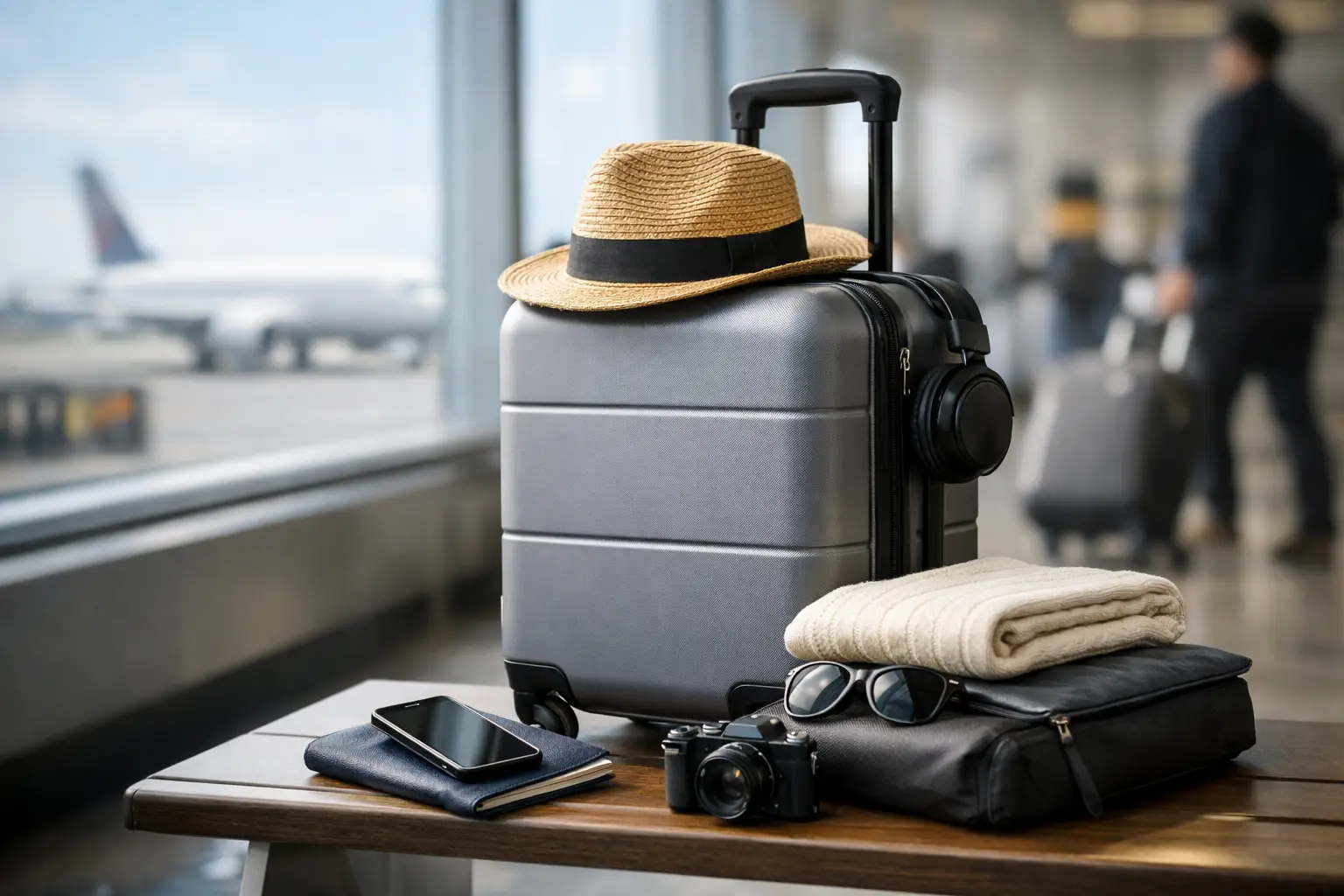
The overhead locker is not a storage unit. It is the difference between walking straight from the plane to the Aerobus stop at Barcelona El Prat, catching a train from Rome Fiumicino, or waiting at a baggage belt while your first evening disappears. The carry-on formula that works for any trip is built for exactly that: fewer decisions, fewer fees and enough flexibility for a three-night city break, a week on an island or a multi-stop rail route.
This is not about travelling with the smallest possible bag. It is about taking the right amount, in the right layout, so every item earns its place.
The carry-on formula that works for any trip
Use a 5-4-3-2-1 packing formula, then adjust only for climate, trip length and itinerary. It keeps your wardrobe tight without leaving you caught out after a delayed flight, a change of plans or a rainy afternoon.
Pack five tops, four bottoms or one-piece options, three layers, two pairs of shoes and one smart-or-special item. Add underwear, sleepwear, toiletries and essential tech separately. The numbers are not a challenge to fill your case. They are a ceiling.
For a long weekend in Lisbon, that might mean five light tops, two trousers, one skirt, one dress, a cardigan, overshirt and waterproof layer. For a Madeira walking break, switch a dress for technical trousers and make one of the three layers a packable insulated jacket. The framework stays intact.
The real benefit is repeatability. You stop packing for imaginary scenarios and start packing for the bookings already in your itinerary.
Start with the bag rules, not the clothes
Airline cabin allowances vary sharply. A standard-looking cabin case can be accepted by one carrier and charged at the gate by another, especially on European low-cost routes. Before you pack, check the live allowance attached to your exact fare, including dimensions, weight and whether a personal item is included.
A practical setup is a small four-wheel cabin case plus a personal-item backpack or tote that fits under the seat. Keep the case for clothing and bulkier items. Use the smaller bag for anything you need from kerb to hotel room:
- Passport, wallet, medication and travel documents
- Phone, charger, power bank and headphones
- A refillable water bottle and light snack
- One spare top and underwear
- Liquids bag and valuables
This split matters on routes where cabin bags may be placed in the hold at the gate. You can still board, change trains or check into your accommodation with your essentials in hand.
Choose a case with a hard-wearing shell, reliable zip and wheels that do not snag on pavements. A soft bag can be better for rail travel, particularly if you will lift it into overhead racks on routes between Paris Gare de Lyon, Barcelona Sants and Madrid Puerta de Atocha. It depends on the journey: wheels win in airports; a structured backpack can win where there are stairs, cobbles and frequent station changes.
Build a wardrobe around one colour base
Your carry-on succeeds or fails before the first item enters the bag. Pick one neutral base – navy, black, charcoal, cream or olive – then add two accent colours that work with it. Every top should pair with every bottom. Every layer should work over at least two outfits.
Start by wearing the bulkiest pieces: trainers or boots, trousers, T-shirt and outer layer. This preserves bag space without making the flight uncomfortable. Avoid wearing a heavy coat just to save room if you are flying to Dubai or Marrakech. A lightweight jacket carried through the airport is usually the more sensible trade-off.
Your five tops should cover different jobs rather than repeat the same look. Think one breathable day top, two everyday options, one smarter top and one long-sleeve or warmer layer. Four bottoms sounds generous, but it can include a dress, skirt or shorts rather than four pairs of trousers.
The single smart-or-special item is your pressure-release valve. It could be a compact linen shirt for dinner in Seville, a swim layer for a resort stay in Tenerife, or a collared top for an evening reservation in Florence. Choose something that folds small and changes the feel of an outfit quickly.
Pack for your itinerary’s real friction points
A beach holiday, city break and self-drive route need different emphasis. The formula works because you change categories, not because you carry more.
For island stays in Majorca, Rhodes or Gran Canaria, prioritise swimwear, a sun layer and sandals. Do not bring separate day and evening beach outfits unless your booking genuinely calls for them. One outfit can take you from breakfast to a coastal walk, then change with a shirt, jewellery or smarter sandals for dinner.
For European city breaks, footwear is the deciding factor. Paris, Rome, Prague and Budapest reward comfortable shoes more than a third evening outfit. Bring one pair you can walk in all day and one compact alternative. If your plan includes Vatican Museums, the Louvre, a full-day tour or long walks between neighbourhoods, test shoes before departure. New trainers are rarely a good idea.
For road trips, your second shoe should handle wet ground, service-station stops and short trails. Add a small laundry pouch and a stain-treatment wipe. You may have more luggage space in the car, but overpacking still slows every check-in and check-out.
For rail journeys, make the case independently manageable. If you cannot lift it above shoulder height, it is too heavy. On busy services, luggage space is limited and boarding windows are short. Keep your ticket, seat details and charging cable in the personal item, not buried beneath jumpers.
Use the 24-hour rule for toiletries and tech
The average traveller carries too many toiletries because full-size products feel reassuring at home. In a cabin bag, they are dead weight and a security risk. Pack what you will use during the first 24 hours, then refill or replace items if the trip is longer.
Use travel-size containers within the liquid limits enforced at your departure airport, and check current security guidance before leaving. Screening technology and rules can differ between airports, so do not assume a previous journey is your guide.
Keep your kit simple: toothbrush, toothpaste, deodorant, sunscreen where needed, cleanser, moisturiser and any non-negotiable product. Buy bulky items at your destination if it is practical. This is especially useful for sun cream on a week in Cyprus or Crete, where a small bottle may not last.
For tech, pack one multi-port charger, one universal adaptor if required, short cables and a power bank that meets airline rules. Download boarding passes, offline maps, rail tickets and hotel confirmations before departure. A flat phone or weak signal should not derail a late arrival at Amsterdam Centraal or Venice Santa Lucia.
Create a departure-day pocket
Do not open your case at the gate looking for a cable, medication or confirmation number. Create one easily reached pocket in your personal item for the items that repeatedly cause delays.
Keep your passport, cards, medication, glasses, charging lead, headphones, pen, snack and empty bottle together. Add a lightweight tote bag if you expect to buy food after security or need an extra layer on the return journey. It weighs almost nothing and gives you room for the items that never fit back into a carefully packed case.
This pocket also protects your itinerary if plans shift. If a delayed flight turns a direct transfer into a late-night taxi or an unplanned airport hotel, you will still have what you need without unpacking on a terminal floor.
Know when the formula needs an exception
Carry-on only is not always the cheapest or easiest choice. A family trip with pushchairs, a ski break, a wedding weekend, a dive holiday or a long work trip may justify checked luggage. So can a route with strict cabin-bag limits where paying for a larger case works out better than forcing everything into a tiny under-seat bag.
The point is to decide early. Compare the fare bundles before booking, not at online check-in. A cabin bag can be excellent value when it removes baggage-belt waits and makes a same-day train connection realistic. It is poor value if the allowance is too small for the equipment your trip genuinely requires.
Pack the formula once at home, zip the bag, then leave it for an hour. When you return, remove three items. You will rarely miss them. What you will notice is the easier walk through the airport, the faster hotel check-in and the freedom to take the next available train when the trip gets moving.