
Car Hire in Lisbon – Do You Really Need a Car?
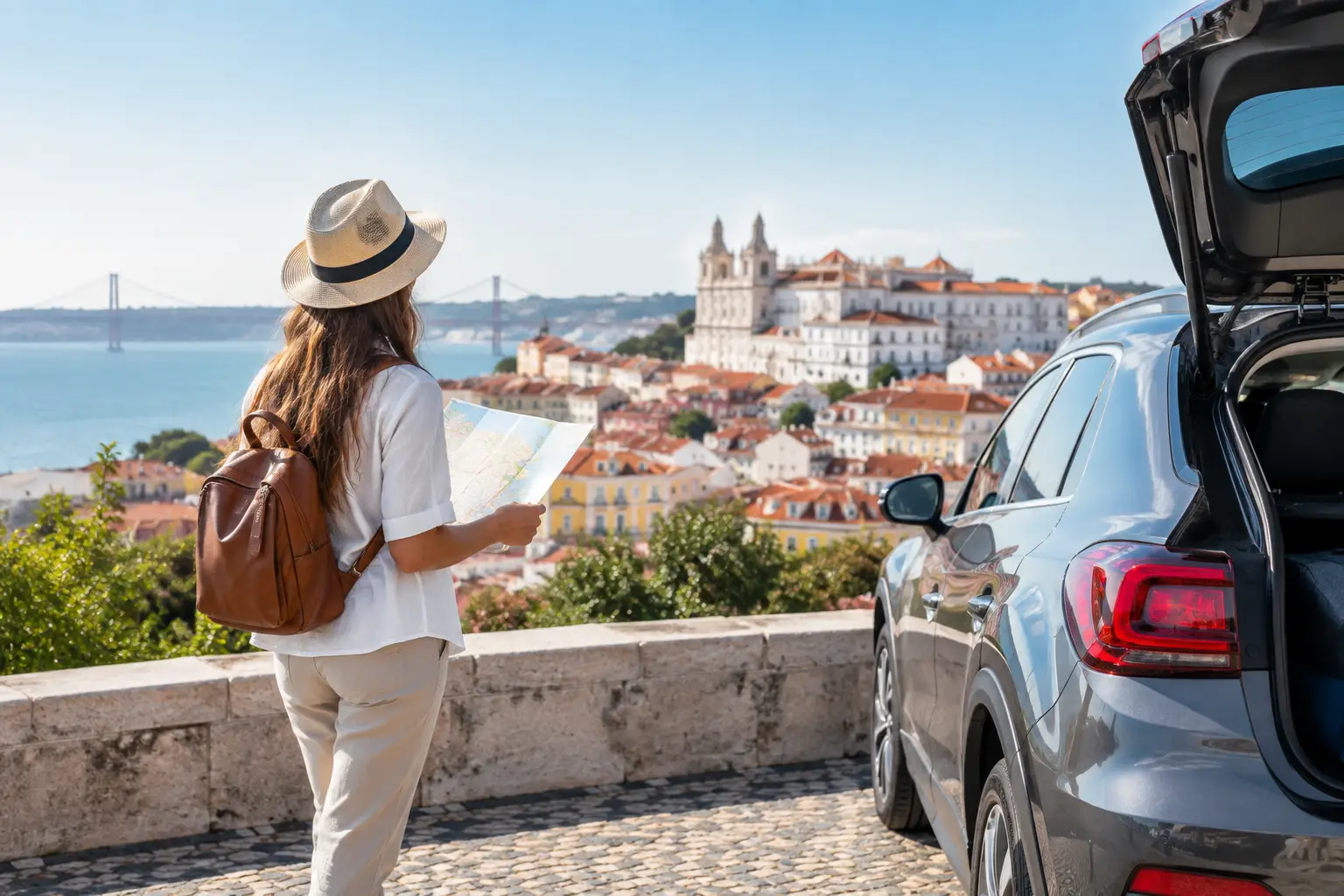
Car hire in Lisbon: do you really need a car? For most city-break visitors, the honest answer is no. Lisbon’s central neighbourhoods are walkable in parts, well served by metro, tram, bus and taxis, and notably less relaxing behind the wheel than they look on a map. A car becomes worthwhile when Lisbon is only the first stop on a wider Portugal itinerary, particularly if you want flexibility beyond the city.
The key is to decide based on where you are staying and what you plan to do after breakfast. Hiring a car for four days while based in Baixa, Chiado, Bairro Alto or Alfama can mean paying for a vehicle that spends most of its time in a car park. Hiring one for the days you head to the Alentejo coast, Arrábida Natural Park or smaller towns beyond Sintra can make perfect sense.
When you can comfortably skip car hire in Lisbon
If your trip is centred on Lisbon itself, leave the driving to someone else. The historic centre is compact but hilly, with narrow one-way streets, steep cobbles and pedestrian-heavy areas. Tram 28 may be famous, but it also illustrates the point: several of Lisbon’s most atmospheric streets were not designed around modern traffic.
The metro is particularly useful for getting between Lisbon Airport and central areas, as well as reaching neighbourhoods such as Saldanha, Marquês de Pombal, Baixa-Chiado and Cais do Sodré. Trams and buses fill in many gaps, while taxis and ride-hailing can be practical for early flights, luggage-heavy journeys or evenings when you would rather not tackle another hill.
A car is also unnecessary for the classic first-time itinerary. You can visit Belém, wander through Alfama, take the Santa Justa Lift area in central Lisbon, eat around Time Out Market near Cais do Sodré, and travel to viewpoints such as Miradouro da Senhora do Monte without driving. Walking is part of the experience, although comfortable shoes matter more than most visitors expect.
Parking is the bigger issue. Your hotel may not have its own spaces, public parking can be limited or expensive in central districts, and street restrictions are easy to misunderstand when you have just arrived. Add unfamiliar road layouts and stop-start traffic, and the convenience case quickly weakens.
Staying outside the historic centre
A car is not automatically useful just because you are outside Baixa or Chiado. Areas such as Parque das Nações, Avenidas Novas and Saldanha remain connected by metro. Even a stay near Oriente Station, which is farther east, works well without a car thanks to rail, metro and airport access.
It is more likely to help if your accommodation is in a residential outer suburb, a rural guesthouse or a property that is difficult to reach by public transport. Before booking, check the nearest station or bus stop, the route from the airport, and whether your accommodation provides parking. That simple check often settles the question.
When car hire in Lisbon is worth it
A hire car is most useful when it supports a wider trip rather than a city stay. Think of it as a tool for the days when train timetables, taxis and organised tours would limit your choices.
It can be a good fit if you are planning to:
- combine Lisbon with the Alentejo, the Algarve or central Portugal
- stay in smaller coastal towns or countryside accommodation
- travel as a family with young children, buggies or substantial luggage
- visit several places in one day where public transport connections are awkward
- carry surf equipment or want to explore beaches beyond the main rail routes
For example, a car gives you more freedom around Arrábida, south of Lisbon, where beach coves, viewpoints and villages such as Azeitão are easier to link together by road. It is also useful for a leisurely route through the Alentejo, where Évora, Monsaraz and wine-country stays do not always join up conveniently by public transport.
Families should still weigh flexibility against hassle. A car can make naps, luggage and child seats easier to manage, but central Lisbon driving remains demanding. One sensible compromise is to spend your city nights car-free, then collect a vehicle on the morning you leave Lisbon.
Sintra, Cascais and nearby beaches: you may not need a car
Many travellers hire a car mainly for Sintra, then discover that the railway would have been easier. Regular trains connect central Lisbon with Sintra, and local buses or taxis can take you onwards to the main palaces and historic centre. Roads around Sintra can be narrow, busy and subject to local restrictions, while parking near the major sights is not guaranteed.
Cascais is another straightforward car-free day trip. Trains run from Cais do Sodré along the coast through Estoril to Cascais, making it an easy choice if you are staying centrally. From Cascais, taxis or local transport can help with places farther along the coast, including Boca do Inferno and Praia do Guincho.
A car becomes more attractive if you want to combine Sintra, Cabo da Roca and quieter beaches at your own pace, especially outside the busiest periods. Even then, plan for slow roads and parking constraints rather than assuming a car will save time.
The airport collection question
Lisbon Airport is close to the city, which is helpful for arrivals but does not mean collecting a car immediately is the right choice. If you are heading straight to a central hotel, use the metro, taxi or pre-arranged transfer and pick up your car later.
If you land and immediately drive south towards the Algarve, east towards Évora or north beyond Lisbon, airport collection can be efficient. Check the rental company’s collection instructions, opening arrangements and the exact location of the return point before you book. These details vary by provider and can affect a very early or late flight.
What to check before booking a hire car
The cheapest headline rate is rarely the full decision. Compare the vehicle terms alongside the price, particularly the excess, deposit requirement, fuel policy, mileage allowance and any additional-driver charge. If you will cross the 25 de Abril Bridge, use motorways or drive through toll roads, ask how electronic tolls are handled and whether there are administration fees.
Choose a car that suits the route, not just the number of passengers. A compact vehicle is generally easier to park and manoeuvre in Portugal’s towns. If you are travelling with four adults and large suitcases, however, an overly small car can turn every hotel move into a packing puzzle.
Before leaving the collection point, photograph existing damage, confirm what fuel the car takes and make sure you understand how to contact the supplier if there is a problem. It is also worth checking your accommodation’s parking arrangements in advance, rather than arriving in Alfama or Bairro Alto and hoping for an available space.
A practical decision for your Lisbon trip
For a two- to four-night Lisbon break, stay car-free. Put the saved parking costs and driving stress towards a well-located hotel, a taxi when your legs have had enough, or a day trip by train. You will see more of the city on foot and avoid designing your day around where you left the car.
For a longer Portugal holiday, consider splitting the plan. Spend the first part in Lisbon without a vehicle, then hire one as you leave the city. This gives you the best of both options: easy access to Lisbon’s neighbourhoods, followed by the freedom to explore places that public transport does not connect neatly.
Trav’s planning rule is simple: hire a car for the roads you genuinely need to drive, not because a city break feels incomplete without one. Compare collection locations and rental terms once your accommodation and day-trip plans are clear, then book the option that makes the rest of your holiday easier.