
Guided Walking Holiday Guide for Easy Booking
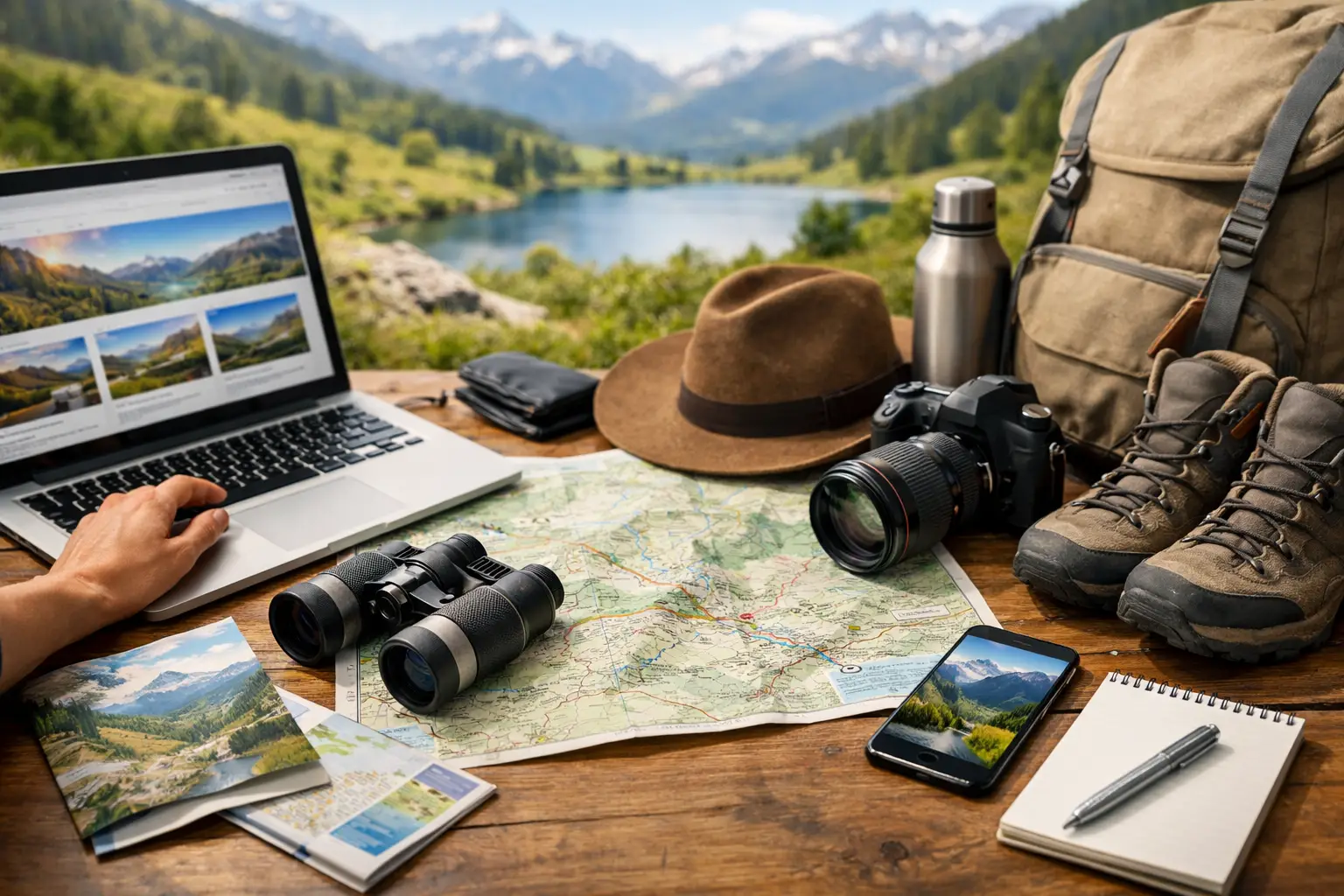
A walking break can go wrong before you lace your boots. The route may be harder than advertised, the hotel may sit a costly taxi ride from the trailhead, or a small-group departure may fill while you are still comparing flights. This guided walking holiday guide shows you how to choose a trip that works in real life: the right terrain, sensible daily distances, confirmed transfers and accommodation that supports the walk rather than complicates it.
For busy travellers, a guided holiday is not about giving up independence. It is about removing the parts that create friction. A good operator handles route planning, guide support, luggage movements and the daily handover between path, hotel and dinner. You still get the views, the local stops and the satisfaction of covering the ground yourself.
What a guided walking holiday should include
Do not book from a scenic photograph and a vague promise of “moderate” walking. Read the itinerary line by line. Moderate can mean a steady coastal path for one company and a 700-metre ascent over loose stone for another.
A properly organised guided departure normally includes a named or clearly defined route, qualified local guide, accommodation, planned luggage transfers where stated, and a way to reach the first walking point. It may also include selected meals, attraction entry and airport transfers. Those details vary sharply, so compare the inclusions rather than the headline price alone.
Before paying, confirm four practical points:
- Daily distance and ascent: Look for both kilometres and elevation gain. Eight flat kilometres and eight steep kilometres are different holidays.
- Group size: Smaller groups are easier to manage on narrow paths, but often cost more. Larger groups can offer better value and a livelier social pace.
- Luggage plan: Ask whether bags move hotel to hotel, whether there is a weight limit, and what happens on days with remote access.
- Weather contingency: Coastal paths, mountain routes and ferry crossings can change with conditions. Check how the operator adapts the plan and whether alternative walks are included.
The guide’s local knowledge is often the best reason to pay for a guided option. On Madeira, for example, a guide can make the difference between a straightforward levada day and an awkward return journey from a one-way trail. On the Algarve, they can time a clifftop route around heat, tide-sensitive sections and the practical question of where the minibus can collect the group.
Choose the route before the hotel
Start with the landscape you actually want to walk through, then build the trip around it. This prevents a common booking mistake: choosing a tempting resort hotel and discovering that every serious walking day begins with a long road transfer.
Madeira for levadas and high ridges
Madeira suits walkers who want organised point-to-point days without hiring a car. The island’s levada paths follow irrigation channels through steep terrain, while routes around Pico do Arieiro and Pico Ruivo bring bigger climbs and exposure. Stay in Funchal if you value restaurants, flight convenience and a broad hotel choice. Choose Ponta do Sol or Calheta for a quieter west-coast base, but check whether your package includes daily pick-ups.
Funchal is the practical choice for a shorter break because it sits within easy reach of Madeira Airport and has the widest range of accommodation. The trade-off is that many classic walks require road transfers. A guide-led itinerary makes those transfers simple, particularly when the finish is nowhere near the start.
Algarve for accessible coastal walking
The Algarve works well for first-time guided walkers and weekend escapes. Routes around Lagos, Carvoeiro and Albufeira combine cliff paths, beaches and villages, generally with less sustained climbing than Madeira. The geometry matters: Lagos gives easy access to the western coast and Ponta da Piedade, while Carvoeiro places you closer to the Seven Hanging Valleys Trail.
Base yourself near the town centre if you want to walk to dinner after the day’s route. Resort areas outside town can be good value, but may add taxi costs and limit choice on non-walking evenings. For flights, compare arrivals into Faro Airport against the onward transfer time to your chosen base before booking the cheapest fare.
Tenerife for volcanic terrain
Tenerife is for walkers who want contrast: pine forest, volcanic slopes, ravines and high viewpoints in Teide National Park. The island is not one uniform walking destination. A stay in Puerto de la Cruz better supports northern routes and Anaga landscapes, while Los Cristianos and Costa Adeje are more convenient for south-coast accommodation and airport access.
Choose a guided programme if you do not want to navigate mountain road logistics or manage a hire car after a long descent. Check the altitude of each day carefully. Sunshine at sea level does not guarantee the same conditions on Teide.
Match the trip to your walking fitness
A confident city walker is not automatically ready for a six-day mountain itinerary. Fitness is only part of the equation. Uneven surfaces, heat, descents and consecutive walking days create fatigue that a single Sunday hike does not reveal.
For a relaxed pace, target routes of roughly 6 to 10 kilometres with modest ascent, frequent stops and at least one flexible day. This works well for coastal Algarve programmes and selected lower-level Madeira levadas.
For a steady active break, look for 10 to 16 kilometres a day, varied terrain and climbing that is clearly stated. This is the sweet spot for many guided holidays, provided you are comfortable walking for several hours on consecutive days.
For a challenging itinerary, expect longer distances, substantial ascent, exposed sections or high-altitude terrain. These trips reward experienced walkers, but are not the place to test new boots or discover a fear of heights.
Be honest when you complete a booking form. Tell the operator about knee issues, vertigo, medication or recent injuries. A reliable company will advise whether the route is suitable, not simply take the sale.
Book in the right order
The most efficient approach is Search | Compare | Book | Go. Secure the elements that have the least flexibility first, then fill in the extras.
- Choose your departure date and walking grade. Group departures, single rooms and peak spring or autumn dates are usually the first constraints.
- Compare flights with the first-night hotel location. A late arrival can turn a low-cost flight into an expensive private transfer. If the package starts early the next morning, consider arriving a day before.
- Reserve the guided walking package. Check deposit terms, minimum group numbers, single supplements and what is covered if weather disrupts a route.
- Add accommodation nights strategically. Book an extra night before the first walk if flights are tight, and an extra night at the end if you want to avoid rushing to the airport with tired legs.
Booking checkpoint: if you are travelling solo, check the single supplement before comparing total prices. A twin-share headline rate may look excellent until the room policy is added. If you are travelling as a couple, ask whether double rooms are in the main hotel or an annex, especially in smaller village properties.
How to compare value, not just price
A lower-cost guided holiday can be the right choice when it uses one base hotel, includes straightforward walks and leaves meals open. It suits travellers who want a clear structure but enjoy choosing their own restaurants.
A boutique small-group trip usually costs more because it may use character hotels, local guides and smaller vehicle transfers. It is a strong fit for couples and friends who care about group atmosphere, regional food and limited admin.
A premium walking holiday may include higher-category rooms, private transfers, luggage handling and flexible route options. It can be worthwhile when time is short or when you are visiting a destination with complex terrain, such as Madeira. The question is not whether premium is objectively better. It is whether it removes costs and decisions you would otherwise have to manage yourself.
When comparing two similar itineraries, calculate the total: flights, airport transfers, checked luggage, dinners, tips, tourist taxes, room supplement and any optional rest-day activity. That is the figure that lets you judge value properly.
Pack for the route, not the brochure
Your guide may supply a day-by-day kit list, but the essentials remain consistent: worn-in walking shoes with suitable grip, a refillable bottle, sun protection, a lightweight waterproof layer and a small daypack. For Madeira and Tenerife, add a warmer layer even when the forecast at your hotel looks hot. Conditions change quickly at higher elevation.
Avoid carrying everything just because your main bag is being moved. A heavy daypack makes descents harder and turns a manageable route into a chore. Keep medication, valuables, water, a spare layer and snacks with you; leave evening clothes and larger toiletries in the transferred luggage.
A guided walking holiday should leave you with one job each morning: eat breakfast, check the day’s briefing and start walking. Pick a route that matches your pace, book the transfers and first night early, and give yourself enough time at the end to enjoy the destination without watching the clock.
For another useful part of planning Madeira, see our All Inclusive Versus Self Catering: Which Wins?.