
Lisbon Versus Porto Weekend Break: Which Fits?
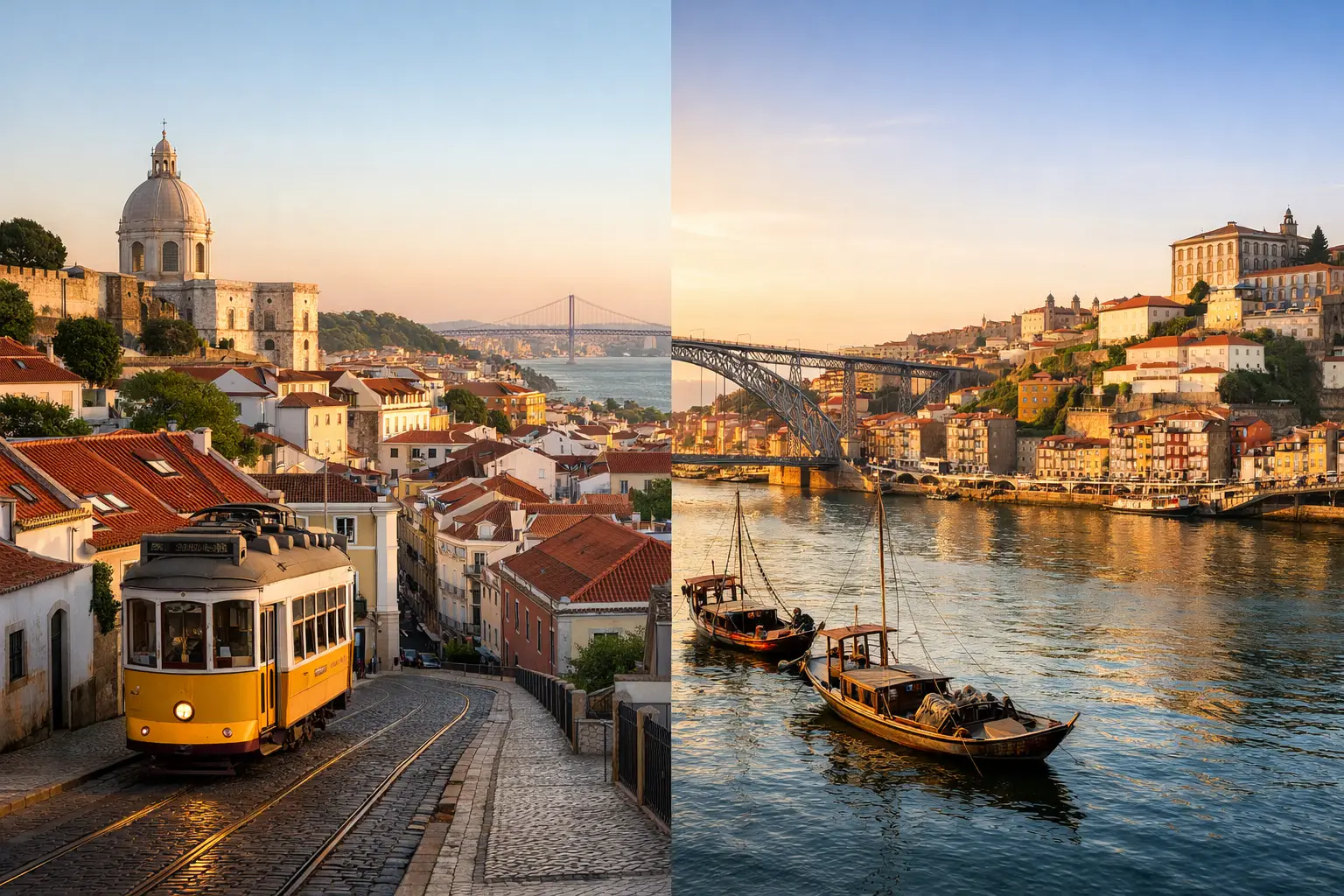
A Lisbon versus Porto weekend break comes down to one practical question: do you want a packed capital-city itinerary, or a compact riverside escape with less time spent moving between sights? Both work brilliantly for a Friday-to-Sunday trip from the UK. Lisbon gives you more choice, more nightlife and more landmark variety. Porto is easier to cover on foot, usually calmer, and better suited to a slower food-and-wine-focused stay.
For a short break, choose the city that matches how you actually travel. A two-night trip is not the moment to book a hotel 40 minutes from the centre or build an itinerary around attractions you will not have time to see.
Lisbon versus Porto weekend break: the fast answer
Choose Lisbon if you want major viewpoints, tram rides, late dinners, museums, neighbourhood-hopping and a bigger range of hotels. It suits first-time Portugal visitors, couples who want busy evenings, and travellers adding a beach or Sintra day after their city stay.
Choose Porto if you want a more contained weekend. The historic core, Ribeira riverfront, São Bento station, cathedral district and Vila Nova de Gaia wine lodges sit within a manageable area. It is the stronger option for a Friday evening arrival and Sunday afternoon departure.
Neither city is flat. Lisbon’s hills are broader and more frequent, particularly between Baixa, Alfama, Bairro Alto and Príncipe Real. Porto’s gradients are sharper around Ribeira, Sé and the bridge approaches. If steep streets will limit your plans, book near a metro station rather than relying on walking alone.
Flights, airport transfers and arrival time
Lisbon Humberto Delgado Airport is close to the city. The red Metro line connects the airport with Alameda, where you can change for the green line towards Baixa-Chiado. Allow extra time if you are arriving during weekday commuter periods or carrying bulky luggage. Taxis and ride-hailing can be useful for accommodation in Alfama, where cobbles and narrow lanes make the final walk awkward.
Porto Airport is farther out, but the transfer is straightforward. Metro Line E runs from the airport to Trindade, Porto’s key interchange, and continues towards Campanhã. For stays in Cedofeita, Bolhão or near Aliados, Trindade is the most useful reference point. For Ribeira, factor in a downhill walk or a short taxi from the station.
For both cities, the best-value flight can become false economy if it lands late on Friday and leaves early on Sunday. Prioritise an arrival that gets you checked in before dinner, then book accommodation with a cancellation policy that suits your plans.
Booking checkpoint: search flights and a central hotel together before committing. A lower air fare is rarely worth it if it forces you into a remote room or cuts your first evening short.
Where to stay for a two-night break
Your hotel location determines whether the weekend feels easy. These are the areas that make logistical sense.
Lisbon: pick your pace
Budget and practical – Baixa or Rossio. You are close to Rossio railway station, the green Metro line and walkable routes to Chiado and Avenida da Liberdade. This is the simplest base for first-time visitors, although it can feel busy and less residential.
Boutique and central – Chiado or Príncipe Real. Choose Chiado for theatres, shops and quick access to Bairro Alto. Choose Príncipe Real for independent cafés, design-led stays and a slightly quieter overnight feel. Both involve hills, so check the exact street before booking.
Character-led – Alfama. Stay here for cathedral views, fado venues and early access to the older lanes before day visitors arrive. It is not the most convenient base for wheeled luggage, taxis at the door or travellers who prefer level routes.
Higher-end and well connected – Avenida da Liberdade. This corridor gives you larger hotels, broad pavements and straightforward Metro access. It is a sensible choice if you want comfort without giving up central access.
Porto: stay close to the core
Budget and convenient – Bolhão or Trindade. These areas make airport transfers easy and put you near Mercado do Bolhão, Santa Catarina shopping street and metro connections. They are ideal for a fast, low-fuss city break.
Boutique and dining-focused – Cedofeita. West of Aliados, Cedofeita offers galleries, restaurants and a more local evening atmosphere. You can walk to the centre, but the return route from the river climbs.
Riverfront atmosphere – Ribeira. The views are the draw, especially after dark, but rooms can be noisier and transport connections less direct. Book this area for setting, not for the fastest airport run.
Wine-lodge access – Vila Nova de Gaia. Across the Dom Luís I Bridge, Gaia works well if cellar tours and river views are priorities. Check whether your hotel is close to the upper-deck metro at Jardim do Morro or lower-level waterfront paths, because the hillside can add time.
What you can realistically fit into a weekend
Lisbon rewards a fuller timetable. Start Saturday in Belém, where the Jerónimos Monastery, riverside paths and custard-tart counters are clustered together. Return to the centre for Baixa and Chiado, then reserve sunset for Miradouro de Santa Luzia, Portas do Sol or São Pedro de Alcântara. Book high-demand monuments and popular fado dinners ahead for weekends, particularly from spring to early autumn.
On Sunday, choose one direction. Take the train from Rossio to Sintra for palaces and estates, but treat it as a proper day trip rather than a quick detour. Alternatively, stay in Lisbon and explore Alfama, the LX Factory area in Alcântara, or museums around Parque das Nações. Trying to do Belém, Sintra and central Lisbon in one weekend usually produces more queues than holiday.
Porto needs less strategic movement. Start near São Bento, whose tile panels are worth a look even if you are not catching a train. Continue through Sé to the upper deck of the Dom Luís I Bridge, cross to Jardim do Morro, then descend into Gaia for a pre-booked port cellar tour. The bridge’s upper deck carries the Metro, so stay alert and use the pedestrian sections carefully.
Use your second day for the Clérigos area, Livraria Lello if you have reserved a timed entry, Cedofeita, and the riverfront. For a longer outing, the Douro Valley is possible, but it makes more sense with three nights. On a two-night Porto break, a full-day valley tour can leave you rushing through the city you came to see.
Food, evenings and the overall feel
Lisbon has the bigger after-dark choice. Bairro Alto starts late, while Cais do Sodré is useful if you want bars close to the river and rail connections. For dinner, reserve rather than assuming you can walk in at peak weekend hours. The city is spread out enough that an unplanned cross-town journey can consume the evening.
Porto is more compact and more direct. Build an evening around petiscos, grilled fish, wine bars or a port tasting, then walk the Ribeira after dinner. The practical trade-off is that Porto has fewer distinct nightlife districts and less of Lisbon’s all-hours energy. For many weekend travellers, that is a benefit rather than a compromise.
Food costs vary sharply by address in both cities. Check menus before sitting down around major viewpoints and the busiest riverfront terraces. A restaurant one or two streets back often gives you a better table, a calmer meal and less pressure to rush.
Budget: where your money goes further
Porto often comes out cheaper for central rooms and meals, although popular weekends can narrow the gap. Lisbon’s wider hotel supply gives you more options, but the most convenient central areas can command a premium. In both cities, Friday and Saturday hotel rates rise first, so compare a two-night package with separate flight and accommodation bookings before you pay.
Lisbon’s extra spending tends to come from taxis on hills, tram or attraction queues, and optional trips to Sintra or the coast. Porto keeps daily transport spending lower if you stay around Trindade, Bolhão, Aliados or São Bento, but cellar tours and premium river-view dining can quickly shift the budget.
The decision worth making before you book
Book Lisbon when you want momentum: landmark sights, varied districts and a city break that can stretch into a longer Portuguese itinerary. Give it three nights if you want Sintra without sacrificing the capital.
Book Porto when you want a polished, easy-to-navigate weekend with strong food, wine and riverfront time. It is the better fit for a genuinely short escape, especially when your flights leave limited daylight either side.
Whichever you choose, book the central hotel first, then shape flights and timed attractions around it. A room within walking distance of the places you plan to see is the simplest upgrade you can make to a Portuguese weekend.
For another useful part of planning Lisbon, see our Lisbon Travel Guide for a Smarter City Break.