
Majorca Self Drive Route Guide for Five Days
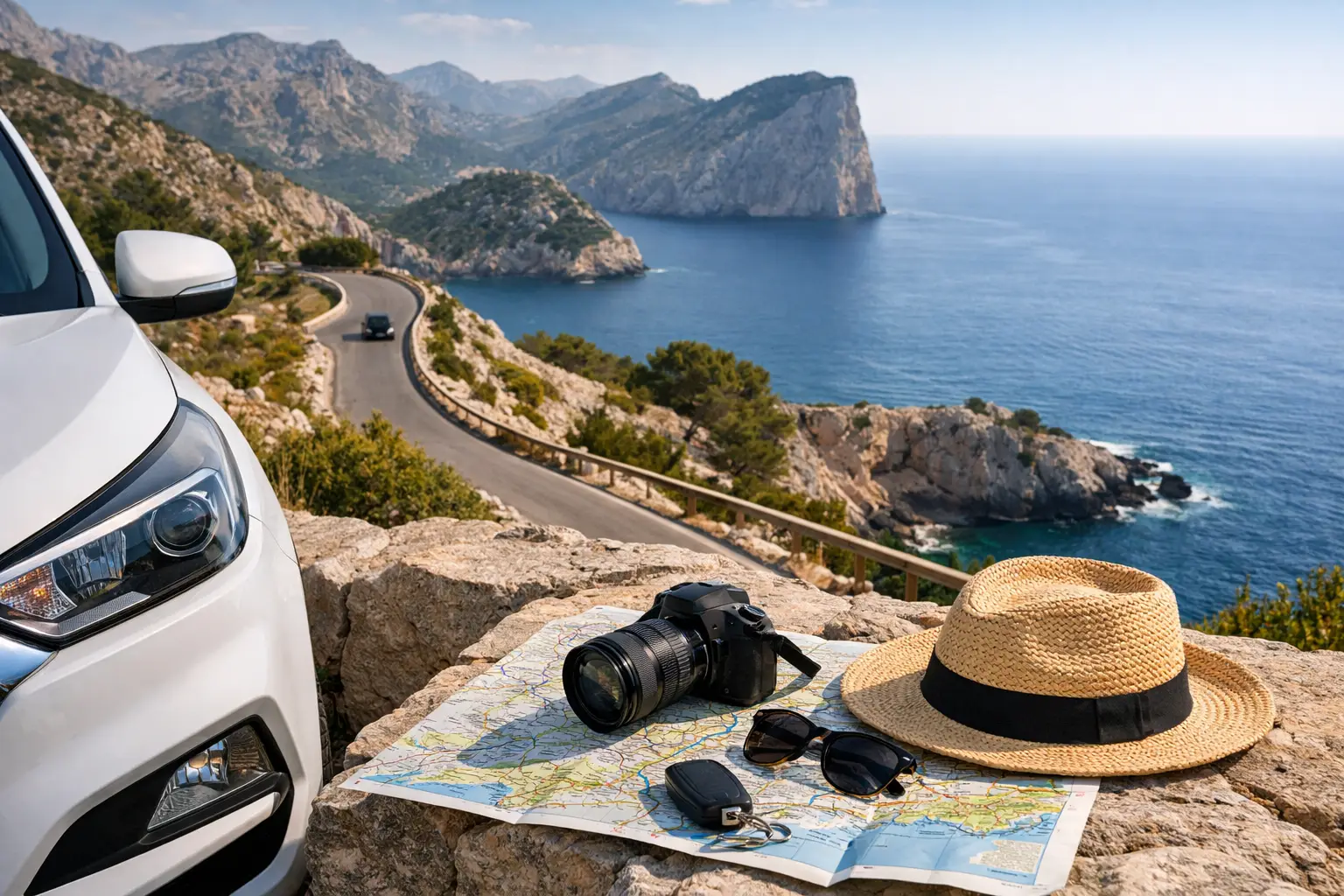
Landing at Palma de Mallorca Airport (PMI) gives you a choice: join the queue for a resort transfer, or collect a car and reach parts of the island that coaches simply cannot serve. This Majorca self drive route guide is built for the second option – a five-day clockwise loop with realistic distances, sensible overnight stops and enough time to enjoy the road rather than race around it.
Majorca is compact, but its roads are not all quick. The mountain stretch from Andratx to Pollença is slow by design, while central and southern routes move far faster. Book your hire car before flights fill up, particularly for Easter, school holidays and late May to September. Small automatic cars sell out first.
Before You Start: Choose the Right Car and Base
For this route, choose a small hatchback or compact SUV. A full-size SUV adds little value on narrow village streets, in Palma car parks or on the hairpins towards Sa Calobra. An automatic is worthwhile if you are not comfortable with steep descents and frequent gear changes in the Serra de Tramuntana.
Collect at PMI Airport rather than in Palma city centre. Airport depots offer the broadest choice, and you avoid navigating central Palma immediately after arrival. Check the fuel policy, excess amount, windscreen cover and whether a second driver is included before committing. Photograph every panel of the car at collection and return.
Avoid making Palma your only base. You will waste time retracing the same roads and fighting for city parking each evening. This plan uses three overnight areas:
- Palma for arrival, historic sights and restaurant choice
- Port de Sóller or Sóller for the Tramuntana mountains
- Port de Pollença or Alcúdia for the north and east coast
For a lower-cost alternative, stay in Inca for the mountain portion and Can Picafort for the north-east. You will trade waterfront access for easier parking and usually more accommodation availability.
Your Majorca Self Drive Route at a Glance
The route runs PMI Airport – Palma – Valldemossa – Deià – Sóller – Sa Calobra – Pollença – Cap de Formentor – Alcúdia – Artà – Cala Ratjada – Santanyí – Palma. It is a loop, so there is no need to pay for one-way hire.
Do not try to add every beach, winery and village suggested by map apps. The strongest version of this trip gives each coast its own day. That is the difference between seeing Majorca and spending the holiday looking for the next car park.
Day 1: Palma Airport to Palma
Driving distance: around 10 km from PMI to central Palma
After collecting the car, drive directly to your Palma hotel and park it. In the old town, a hotel with pre-bookable parking is worth paying for. Street spaces are limited, regulated and not something to build an arrival plan around.
Use the afternoon on foot. Start at La Seu Cathedral, walk through the lanes behind Plaça Major, then follow the waterfront beside Parc de la Mar. For dinner, base yourself around Santa Catalina if you want busy bars and modern restaurants, or stay near La Lonja for a more central evening.
If your flight lands late, do not force a city itinerary. Book a night near Can Pastilla or Palma’s waterfront, collect the car the following morning if that suits your hire terms, and begin fresh.
Best stay choice: Palma’s old town is best for a short break and first visit. Santa Catalina works well for nightlife. The airport side of the bay is practical only for a late arrival or early departure.
Day 2: Palma to Sóller via Valldemossa and Deià
Driving distance: around 45 km, but allow a full day
Leave Palma after the morning commuter flow and take the Ma-1110 towards Valldemossa. This is your first proper mountain-road day, but it is manageable in a compact car. Park in one of the signed public areas outside the tightest village streets, then walk to the former Carthusian monastery and the stone lanes around the centre.
Continue west on the Ma-10 to Deià. This village is small and parking is the main friction point. Arrive before lunch in peak season, or be prepared to continue towards Sóller and return later. Do not stop in unofficial roadside spaces – mountain-road enforcement and access restrictions are not worth the risk.
From Deià, carry on to Port de Sóller, your overnight base. The horseshoe bay is easier to navigate than it appears, but reserve hotel parking. Once checked in, leave the car and use the promenade on foot.
This is the route’s most sought-after overnight. For value, look in Sóller town, about 10 minutes inland, where you gain a proper town centre and often easier access to the next morning’s roads. For a higher-end stay, Port de Sóller puts the sea directly outside your door.
Day 3: Sóller to Pollença via Sa Calobra
Driving distance: around 85 km, with demanding mountain sections
Set off early for Sa Calobra. The approach from the Ma-10 uses the Ma-2141, a famously tight sequence of bends leading down to the coast. It is not dangerous when driven slowly and patiently, but it is unsuitable for drivers who dislike narrow roads, coaches approaching blind corners or long downhill braking.
Use low gears on the descent where appropriate. Never cut bends, and expect delays behind coaches, cyclists and cautious drivers. Once parked at Sa Calobra, walk through the rock-cut passage to Torrent de Pareis. The return climb is as slow as the way down.
Back on the Ma-10, head towards Lluc and then east to Pollença. You can overnight in Pollença’s historic town or at Port de Pollença. Choose the town for its square, restaurants and central access. Choose the port for beach time and a cleaner launch for Cap de Formentor.
If Sa Calobra feels like too much driving for one day, skip it. Take the Ma-10 directly from Sóller through Fornalutx, Lluc and towards Pollença instead. You will have a calmer day and more time in the north.
Day 4: Cap de Formentor, Alcúdia and the North-East
Driving distance: 70-110 km, depending on your finish point
Drive from Port de Pollença towards Cap de Formentor early. Access rules on the peninsula can change seasonally, including limits on private vehicles at specific times. Check the current local traffic arrangements before setting out, then use a shuttle service if restrictions apply. Do not assume last year’s rules are still in force.
Even when private access is permitted, this is another narrow road. Stop only in designated viewing areas and allow extra time for cyclists. The point is the coastal geometry and viewpoints, not speed.
Return south through Alcúdia Old Town, where the walled centre is best explored on foot. Then follow the Ma-12 towards Can Picafort, or continue inland through Artà before reaching Cala Ratjada. Artà is the better choice for a lunch stop if you want a historic centre rather than another beach promenade.
For your final two nights, use Cala Ratjada if small coves and the far north-east appeal, or Alcúdia/Playa de Muro if you want a wider hotel choice and an easier road back to Palma. Budget travellers should compare Can Picafort carefully – it is less polished, but often practical for parking and longer stays.
Day 5: North-East to Santanyí and Back to Palma
Driving distance: around 150 km
Take the main roads south-west through Manacor and towards Santanyí. This is the longest transfer day, but it is far easier than the Tramuntana. Santanyí’s centre is a good place for a final lunch, particularly on market days when roads and parking become busier. Arrive early, use signed car parks and expect the centre to be pedestrian-focused.
If you have time, continue to the coast near Cala Figuera for its working harbour layout, then return to Palma via the Ma-19. Fill the tank before reaching the airport zone, where fuel prices can be less favourable and return queues can add pressure.
For an evening flight, aim to be near PMI well ahead of your car return window. Allow time for fuel, the condition check and the shuttle or walk back to the terminal. A rushed return is where minor hire-car disputes become expensive.
Parking, Tolls and Driving Rules That Matter
Majorca has no motorway tolls, and the main roads connecting Palma, Inca, Manacor and Alcúdia are straightforward. The real issues are parking and mountain-road patience.
In Palma, use a secure public or hotel car park rather than circling the old town. At beaches, do not leave valuables visible, even for a quick swim. In villages, follow resident-only zones and marked restrictions exactly. Blue-zone parking, controlled areas and seasonal rules vary by municipality, so read the machine and signs rather than relying on a generic parking app.
Bring a phone mount and download offline navigation before leaving the airport. Signal can weaken in mountain sections, and driving while trying to interpret a screen is an unnecessary distraction. Keep your driving licence, hire agreement and identification accessible.
Book This Route in the Right Order
Secure the car hire first, then book accommodation in Palma, Sóller and the north. This route becomes far more expensive when you leave Port de Sóller or Pollença until last, especially on weekends. Build the driving days around your hotel parking, not the other way round.
Make Me a Booking is designed for this exact kind of trip: compare your flight, car and stays in one planning session, then leave with a route that works on the road as well as it does on a map. Book the mountain base early, keep the car compact, and Majorca will feel remarkably easy to cover.