
Rome Tickets Advance Booking: What to Reserve
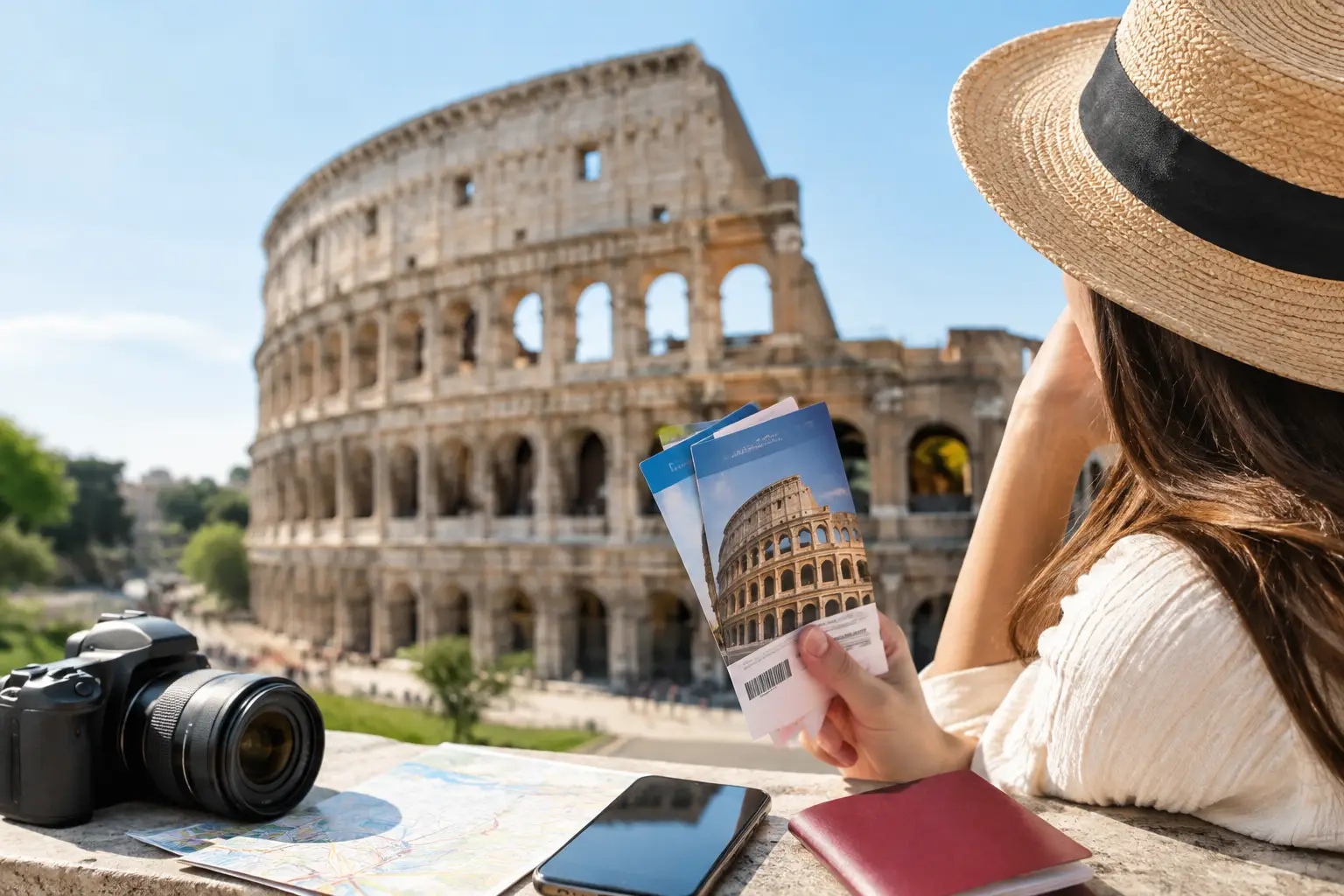
A Rome city break can go wrong before you have even left the UK: the attraction you planned your day around has no entry slots left, or the only remaining times split your group across the afternoon. Rome tickets advance booking is worthwhile for a small number of headline sights, but reserving every possible activity can make your itinerary needlessly rigid.
The sensible approach is to book the places with controlled entry and limited capacity, then leave room for piazzas, churches, neighbourhood walks and meals that make Rome feel less like a timetable. Start with the attractions that matter most to you, choose dates and times that work with where you are staying, and check the current terms directly before paying.
Which Rome tickets should you book in advance?
For most first-time visitors, the Colosseum, Vatican Museums and Galleria Borghese are the strongest candidates for advance booking. All use timed or capacity-managed entry in some form, and availability can be constrained on weekends, school holidays and busy spring and autumn dates.
The Pantheon may also require a timed ticket depending on the date and visitor category, while certain guided experiences, underground areas and evening openings have much smaller allocations than standard visits. If an experience is central to your trip, do not assume you can simply join a queue on the day.
| Attraction or experience | Advance booking advice | Why it matters | |—|—|—| | Colosseum, Roman Forum and Palatine Hill | Book ahead, particularly for a specific time or special access | Timed entry and high demand can shape your whole day | | Vatican Museums and Sistine Chapel | Book ahead | Queues and popular time slots can be substantial | | Galleria Borghese | Book ahead | Entry is generally limited to set sessions with restricted visitor numbers | | Pantheon | Check the current system, then reserve if required or preferred | Admission arrangements can change and busy periods are less flexible | | Guided food tours, Vatican tours and underground sites | Book ahead if this is a priority | Small groups and specialist access can sell through first |
The Trevi Fountain, Spanish Steps, Piazza Navona, most neighbourhood wandering and many churches do not need pre-booked sightseeing tickets. They are better treated as flexible stops around your reservations. St Peter’s Basilica itself has traditionally had different access arrangements from the Vatican Museums, so check each separately rather than assuming one ticket covers both.
How far ahead should you reserve Rome attractions?
There is no single number of days that suits every trip. If you are travelling for Easter, May half-term, summer holidays, a long weekend or the Christmas and New Year period, arrange the essential attractions as soon as your flights and accommodation are settled. This gives you the best choice of entry times rather than forcing a poor itinerary.
For quieter winter weekdays outside major holidays, you may find more choice. Yet Galleria Borghese and specialist tours are still worth arranging early because their capacity is limited regardless of season.
A useful rule is to separate “must do” from “would be nice”. Reserve the first category before departure. Keep the second for Rome itself, when the weather, your energy levels and local availability are clearer. A three-night break usually needs only two major pre-booked attractions. Trying to fit the Vatican, Colosseum, Borghese, Castel Sant’Angelo and several tours into a short stay often means spending more time crossing the city than seeing it.
Book after you choose your hotel area
Your entry time should work with your base. From the Historic Centre, Trevi or Pantheon area, the Vatican is across the Tiber to the west, while the Colosseum lies south-east of the centre. From Prati, near Ottaviano, an early Vatican Museums slot is convenient; from Monti, the Colosseum and Roman Forum are easier to reach early.
Travellers staying near Termini should also consider the Metro, but do not build a tightly timed plan around it without allowing for walking, station exits and queues. Rome is compact on a map, though uneven pavements, heat and crowds can slow a family group or anyone with limited mobility.
Build your days around one fixed booking
The easiest Rome itinerary has one anchor booking per half-day, not three. An early Vatican Museums entry can be followed by St Peter’s Square, Castel Sant’Angelo and an evening in Prati. A Colosseum booking pairs naturally with the Forum, Palatine Hill and Monti, where you can stop for lunch or dinner without needing another ticketed deadline.
Avoid booking the Vatican and Colosseum back-to-back. They are not next door, and both can take longer than expected once security, meeting points, toilets and photo stops are included. This matters even more if you have children, use a pushchair or are visiting in hot weather.
Where an attraction offers a timed entry window, arrive with a sensible buffer. Read the ticket conditions carefully: some tickets require entry at a precise time, and some guided tours have a meeting point outside the venue rather than at the entrance. Missing that distinction is an expensive mistake.
Choose the right ticket, not the longest description
Ticket names can make comparison difficult. A standard admission ticket, a hosted-entry product, a guided tour and an access pass may all appear to offer similar entry, yet they can have very different cancellation terms, meeting arrangements and areas included.
Before booking, check four things: the exact attraction and areas included, the entry or meeting time, whether a guide is included, and the cancellation or amendment policy. For the Colosseum, confirm whether the ticket includes the Roman Forum and Palatine Hill, as well as whether it grants access to any restricted area. For the Vatican, establish whether you are booking museum entry only or a guided visit with a group.
Do not pay extra solely because a listing uses phrases such as “skip the line”. Timed tickets commonly reduce the ticket-purchase queue, but security checks and access controls may still involve waiting. The value of a tour is usually the guide’s context, smaller group size or access arrangement, not a guarantee that there will be no queue at all.
When booking ahead is not the best choice
Advance booking has a trade-off: certainty versus flexibility. If you have only a rough outline for your trip, are travelling with young children who may need slower days, or have mobility considerations, reserve fewer fixed-time activities. A pre-booked 08:30 start may look efficient, but it is not helpful if breakfast at your hotel begins later or your group needs an easier morning.
It can also be sensible to wait on weather-sensitive activities such as open-top bus tours, golf buggy tours and some outdoor food or neighbourhood walks. Look at the provider’s cancellation terms and current forecast before deciding.
Free or low-commitment options give Rome breathing space. Wander Trastevere in the late afternoon, visit the Jewish Ghetto, walk from Piazza del Popolo through Villa Borghese, or spend time in Testaccio around a meal. These plans can move around a museum reservation rather than compete with it.
A practical booking order for a Rome break
Once your travel dates are confirmed, start with accommodation and flights, then map the attraction priorities against your hotel location. Book the one or two experiences that would genuinely disappoint you to miss. Only after that should you compare guided tours, transfers and additional activities.
Keep each confirmation in one place, with the local date, time, meeting point and booking conditions clearly labelled. Rome uses Central European time, which is an easy detail to overlook when confirmations arrive while you are still in the UK. Save tickets offline as well as in your email, particularly if more than one person in your party holds bookings.
Make Me A Booking can help you move from a list of Rome ideas to a plan that actually fits your dates, neighbourhood and pace. Ask Trav to compare the options you are considering, then check live availability and terms with the selected booking partner before you commit.
A well-planned Rome trip should have a few firm appointments and plenty of space between them. Reserve the sights that control your day, then leave enough unscheduled time to take the longer route through a piazza, stop for lunch or stay a little longer where Rome catches your attention.
For another useful part of planning Rome, see our Are Eurail Passes Worth It for Your Trip?.
For another useful part of planning Rome, see our Termini Trastevere Hotels for Your Rome Break.
For another useful part of planning Rome, see our Rome Travel Guide: Plan a City Break That Works.
For another useful part of planning Naples, see our Naples Station Guide: Which Stop to Use.