
Solo Travel Safety: The Five-Check Routine
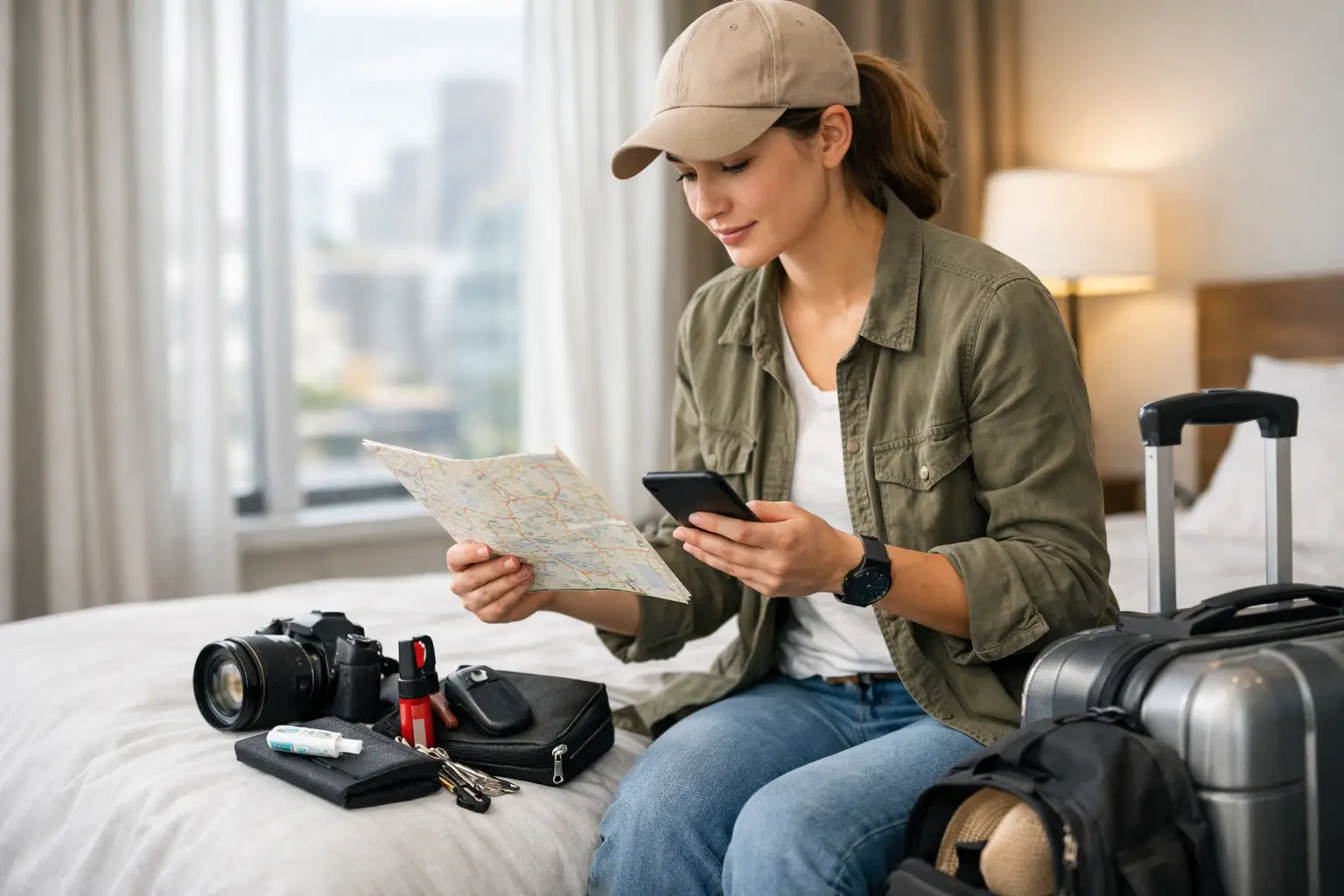
A missed train, a dead phone and an unfamiliar hotel entrance can turn a straightforward city break into an expensive problem very quickly. Solo travel safety: the five-check routine gives you a fast decision system for the moments that matter most – before you book, before you leave, and whenever the plan changes.
This is not about travelling nervously or packing your itinerary with unnecessary rules. It is about removing the avoidable friction that makes solo travellers vulnerable: arriving after dark without knowing the final walk, relying on one bank card, or booking accommodation far from the transport you will actually use.
Why solo travellers need a repeatable routine
When you are travelling independently, there is no second person to hold the luggage, check the platform number or spot that a taxi has taken the wrong turn. That is not a reason to stay home. It is a reason to build sensible backups into the booking.
The strongest solo trips tend to have one thing in common: the traveller has made the important choices before departure. They know where they are sleeping, how they will reach it, what happens if a delayed flight pushes arrival into the evening, and who can access their plans if they stop responding.
Use the five checks below for a two-night break in Paris, a multi-stop rail route through Italy, or a self-drive week in Madeira. The details change. The routine does not.
The solo travel safety five-check routine
1. Check the base, not just the hotel score
A high review score is useful, but it is not a location plan. Before booking, check the property against the journey you will make at the least convenient time of day: your arrival and your return after dinner.
In Barcelona, a hotel near Plaça de Catalunya, Passeig de Gràcia or Sants Estació can reduce late-night transfers and give you multiple metro, train and taxi options. In Rome, staying within a short, clearly mapped walk of Roma Termini, Monti or Prati may suit different itineraries, but the best choice depends on your arrival station, planned sightseeing and flight time.
Look for three practical details:
- A direct final transfer from the airport, station or ferry terminal.
- A well-lit approach with a recognisable entrance, rather than an unmarked side street or isolated lane.
- Staffed reception or clear self-check-in instructions, especially if your flight lands late.
- Recent guest comments that mention noise, access, the surrounding streets and check-in reliability.
Budget travellers should prioritise proximity to a major station or central transit interchange over extra floor space. Boutique stays can offer a quieter neighbourhood feel, but confirm the route home before committing. Premium hotels are often best for late arrivals because staffed reception, luggage support and a booked transfer remove several moving parts at once.
Booking decision: pay a little more for the location that saves a complicated transfer. A cheaper room can become poor value if it requires an unplanned taxi every night.
2. Check every transport handover
Most travel stress happens between modes: plane to train, train to hotel, ferry to hire car. Your ticket may be confirmed, but the handover can still be unclear.
Write down the exact sequence in your phone notes. For example: arrive at Lisbon Airport, take the Metro from Aeroporto station, change only if necessary, then walk from the final station to the accommodation. Add the hotel address in the local map app before boarding. Screenshots matter when mobile signal is weak or data has not connected yet.
For rail travel, identify the departure station by its full name. Paris Gare du Nord and Paris Gare de Lyon are not interchangeable. Neither are Venice Santa Lucia and Venezia Mestre. Check the live platform display on the day, because platforms and service patterns can change.
If you arrive late, choose your final-mile option in advance. A licensed taxi rank, hotel-arranged collection or reputable pre-booked transfer is usually simpler than standing outside comparing unfamiliar apps with luggage in hand. For a self-drive route, confirm where the hire-car desk is located, whether collection is inside or outside the terminal, and what happens if your flight is delayed.
Do not build an itinerary around a connection that only works if every service runs perfectly. Leave a buffer, particularly when a flight connects to a last train, final ferry or timed accommodation check-in.
3. Check your payment, phone and document backups
Your wallet and your phone are not merely belongings. They are your route home, room key, boarding pass, booking reference and emergency payment method. Treat them accordingly.
Carry one main card and keep a second payment card separately. That could mean one in your wallet and one in a concealed pouch or locked suitcase. Keep a modest amount of local cash where it is genuinely useful, but avoid carrying your full travel budget in one place.
Your phone should have offline maps for your arrival area, a portable charger and the accommodation address saved in more than one format. A screenshot of the booking confirmation is often faster to retrieve than an email when airport Wi-Fi is overloaded.
Store copies of your passport, travel insurance details and key reservations securely online, then leave a copy with a trusted person at home. That person does not need a minute-by-minute itinerary. They do need your accommodation name, transport details and the date you expect to check in.
There is a trade-off here. Constantly checking devices in public can make you distracted, while hiding everything away can make access difficult. Keep the essentials easy to reach without displaying your full travel setup at a café table, station platform or hotel lobby.
4. Check the room before you settle in
Once you arrive, take two minutes to assess the room. Confirm the door locks properly, locate the peephole or door viewer where available, find the emergency exit route, and check that your phone can charge. If something feels wrong – a damaged lock, an unexpected request to pay outside the booking, or a property that does not match its listing – raise it immediately with the accommodation provider or booking support team.
Avoid announcing your room number at reception or leaving the key card on a table with your address-facing details visible. If the property uses a key safe, make sure the instructions are clear before you travel and do not share access codes in public messages.
This is also the moment to reset your evening plan. If you have arrived tired, hungry or later than expected, choose the close, straightforward option rather than forcing the original itinerary. A meal near the hotel and an early start can be the safer, better-value choice.
5. Check out of the plan when conditions change
The final check is judgement. Travel plans are useful until real conditions tell you to change them.
If a neighbourhood feels quieter than expected, a route is poorly lit, you are being pressured by someone, or your transport is delayed beyond the point where your planned walk makes sense, switch to the backup. Go into a staffed café, hotel or transport hub. Use a licensed taxi. Call the accommodation. Spend the extra money if it solves a live problem.
This matters in busy destinations too. Around Amsterdam Centraal, Dubrovnik Old Town gates or Marrakech medina entrances, crowds can make navigation and pickpocketing harder rather than easier. Keep your bearings, secure valuables before entering a busy area, and set a clear meeting or return point if you join a tour.
Do not confuse flexibility with improvising everything. The safest solo travellers are often the most adaptable because they have already arranged a fallback: extra card, charged phone, saved address, alternative route and a base they can reach without guesswork.
Build safety into the booking, not the panic
A practical itinerary should make the safe choice the easy choice. Book an arrival-friendly base. Select transport with realistic connection time. Keep your first evening light. Pre-book the elements that sell out or become harder to arrange under pressure, especially airport transfers, late check-in accommodation, long-distance rail and popular timed attractions.
At Make Me a Booking, the goal is simple: Search | Compare | Book | Go with the key logistics already thought through. You can still leave room for the restaurant you spot on a side street or the extra hour in a museum. Just do not leave your arrival, sleeping arrangements or route back to chance.
Before you zip the case, run the five checks once more. A secure base and a clear next move give you something better than false confidence: the freedom to enjoy the trip on your own terms.