
Guided Photography Tours Worth Booking in Europe
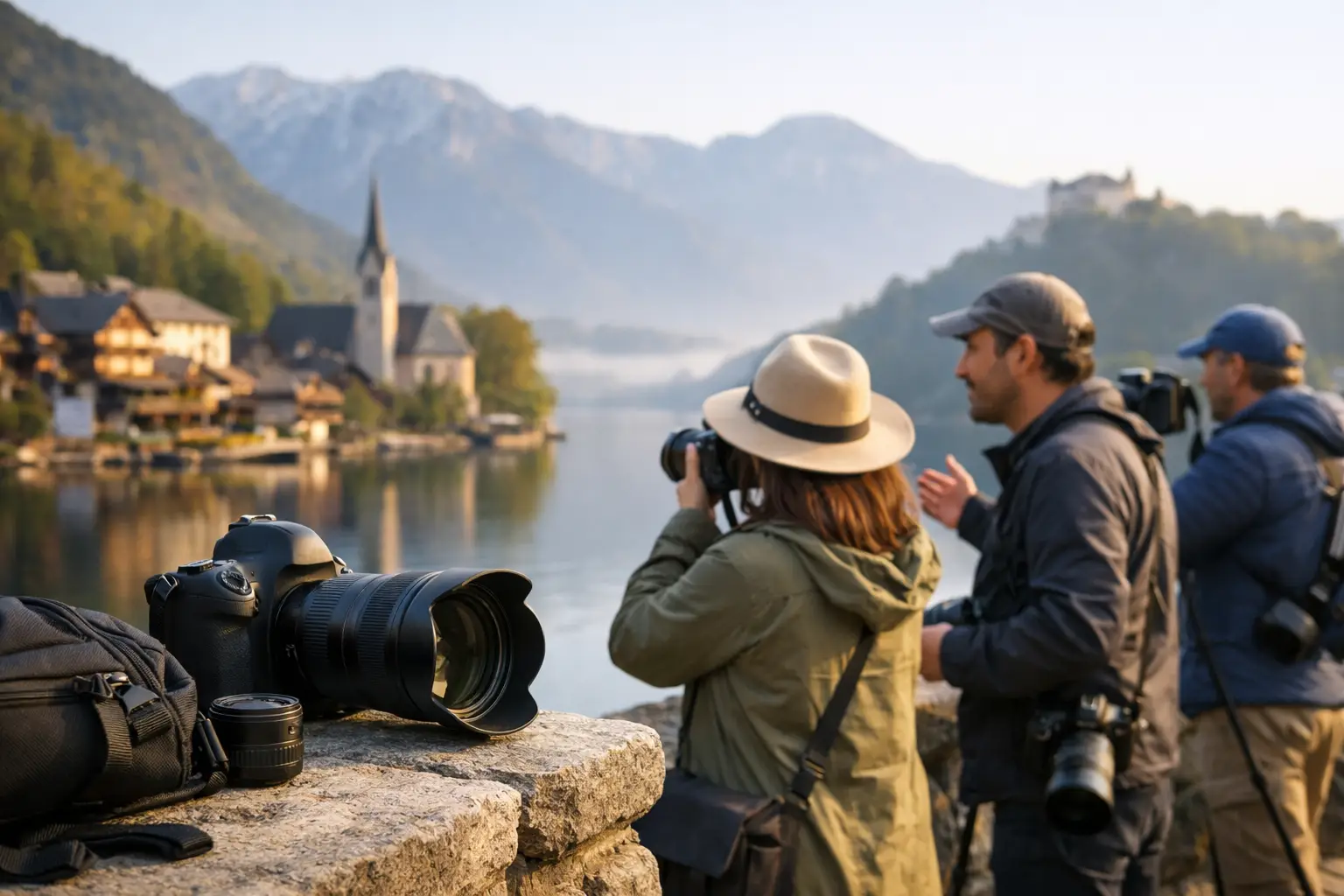
A two-night city break can disappear quickly when you are finding viewpoints, waiting for light and second-guessing whether a lane is safe after dark. Guided photography tours turn that scouting time into shooting time. You get a local route, practical camera help and a group that is there for the same reason: returning home with stronger images, not just a fuller camera roll.
For short breaks, the best tour is rarely the longest one. It is the one that fits your arrival time, your neighbourhood and the type of photographs you actually want. Book transport and accommodation first, then reserve the photography session around the light and your energy levels.
What you are really booking
A good photography guide does more than point towards famous landmarks. They read the conditions, know which streets catch first light, understand when a viewpoint becomes too crowded and can help you react when the weather changes. That is particularly valuable in cities where a single missed train, late check-in or sudden shower can derail a tightly planned weekend.
Most guided photography tours fall into three useful formats. A sunrise walk suits travellers who want empty streets and soft light, but it demands a hotel within easy walking distance of the meeting point. A golden-hour and blue-hour tour is easier after a day of sightseeing and often works best for skyline, street and architecture images. A private workshop costs more, yet it is the strongest choice if you need hands-on help with manual settings, editing workflow or a particular shot list.
The trade-off is simple. Small group tours bring a lower per-person cost and a sociable pace, while private tours give you control over stops, time and tuition. If photography is the main purpose of the break, pay for the private guide. If you mainly want a well-planned route and several reliable viewpoints, a small group is usually enough.
Pick a city and a route that works after check-in
The right location is not only about visual appeal. It is about how quickly you can get from airport or station to your hotel, then from your hotel to the meeting point.
Barcelona: architecture without wasted walking
For architecture and street scenes, base yourself in Eixample or at the southern edge of Gràcia. Both place you within practical reach of Passeig de Gràcia, Casa Batlló, Casa Milà and the Sagrada Família area. The L3 and L5 metro lines make it easier to reach central meeting points, although early tours may begin before the most convenient services for your exact hotel.
A strong Barcelona photography route should be specific about whether it covers the Gothic Quarter, El Born, the waterfront or Park Güell. These are not interchangeable. The narrow lanes around Plaça Sant Felip Neri work well for texture and shadow; the seafront needs different lenses, weather and timing. Do not book a vague “Barcelona highlights” session without checking the route and walking distance.
Best for: architecture, urban detail and editorial-style street photographs.
Lisbon: plan for hills, trams and changing light
Lisbon rewards a guide who can manage its gradients. Staying around Baixa-Chiado, Rossio or Avenida da Liberdade keeps you connected to the centre, while Alfama offers atmosphere at the cost of steep climbs and slower luggage transfers. A guided route through Alfama, Mouraria and the viewpoints around Miradouro de Santa Luzia can cover a lot of visual ground, but footwear matters as much as your camera body.
Ask whether the tour uses public transport or stays on foot. Tram 28 is photogenic, but it can be crowded and is not a dependable way to move a group on a fixed schedule. A guide with a route that works without relying on one packed tram is making your session far more reliable.
Best for: tiled facades, trams, viewpoints and layered cityscapes.
Venice: book early and start before the crowds
Venice is where timing earns its keep. A sunrise guide can lead you through San Marco, Castello and quieter canals before day visitors arrive from Venezia Santa Lucia and the mainland. For a short break, stay near Santa Lucia or in Cannaregio if you want an easier arrival and a practical pre-dawn walk. San Marco is central for landmark access, but luggage handling and hotel pricing can be less forgiving.
Check whether the itinerary includes a vaporetto journey and whether the fare is included. Water transport is part of Venice’s geometry, not a background detail. If a tour promises Burano, sunset canals and San Marco in one short session, treat that as a warning sign. The distances and boat timings need room.
Best for: reflections, quiet canals, leading lines and low-light scenes.
Madeira: choose a specialist landscape guide
For Madeira, a general city photography walk is not the same as a landscape excursion. You need a guide who understands cloud cover, road access and safe stopping points around Pico do Arieiro, Ribeiro Frio or the north coast. Base in Funchal for the widest hotel choice and straightforward airport transfers, but confirm the pickup area before reserving.
Mountain light changes quickly. A reputable operator should state the approximate duration, elevation involved, vehicle type and whether the outing runs if visibility is poor. A dramatic forecast can produce excellent photographs, but only if the route has sensible alternatives rather than a rigid summit-only plan.
Best for: cloud inversions, levada landscapes, coastlines and long-lens detail.
How to vet a guide before you pay
Look beyond the gallery. Portfolio images tell you whether you like a guide’s visual style, but they do not reveal whether the trip is organised. Read the latest reviews for comments on group size, route pace, clarity of meeting instructions and how the guide handled weather or late arrivals.
Before booking, confirm five practical details:
- Group cap: Eight people behaves very differently from sixteen when everyone needs space at a viewpoint.
- Meeting point: Request the exact square, station exit or hotel pickup zone, not just a broad district.
- Finish point: It matters if you have dinner plans, a train from Roma Termini or an early airport transfer.
- Skill level: A tour for mobile phone photographers may be ideal for composition, but frustrating if you need exposure or autofocus support.
- Weather policy: Check whether the operator reschedules, offers a refund or runs a modified route in rain and high wind.
Also ask what is included. Some guides lend tripods or filters; others expect you to bring everything. If you are travelling hand-luggage only, that answer determines what you pack.
Build the rest of the break around the shoot
Treat the photography tour as a fixed anchor, then plan the hotel, meals and transport around it. A sunrise booking after a late flight is a poor deal if you are staying forty minutes from the meeting point. Likewise, a blue-hour session is easier when your hotel is near the finish area, allowing you to put down gear before dinner.
For a budget-led weekend, choose a small-group morning walk and stay close to a metro or tram interchange rather than paying for a landmark address. In Madrid, for example, a base near Sol, Gran Vía or Atocha keeps central routes manageable and provides quick connections through Sol station.
For a boutique city break, choose a hotel in the same neighbourhood as the session’s final location. In Paris, a Left Bank route ending near the Seine is much easier to enjoy when you can walk back to your room rather than navigate the Metro with a tripod after dark.
For a photography-first trip, reserve the private tour for day one or day two. You will learn the layout, receive location-specific advice and can revisit the strongest spots independently later. That is better value than leaving the session until your final morning, when there is no time to use what you learned.
Booking point: Secure the guide once your flights and hotel are confirmed, especially for weekends, holiday weeks and autumn colour periods. Small-group slots are limited precisely because a useful guide cannot manage a large crowd at a narrow viewpoint.
Pack for the tour you booked, not every possible shot
A compact kit moves faster and attracts less attention. For city walks, one camera body, a standard zoom, a small fast prime, spare battery and weather protection cover most situations. Add a lightweight tripod only if the guide confirms there is time and space for long exposures. In busy historic centres, setting up a full-sized tripod can be impractical or restricted.
Bring a mobile phone even if you shoot with a dedicated camera. It holds your booking confirmation, maps, emergency contact and a backup way to photograph a route if your battery or memory card fails. Wear shoes with grip in Lisbon, Venice and Madeira, where wet stone and uneven surfaces can slow the entire group.
The best guided photography tour leaves you with more than landmark images. It gives you a repeatable route, sharper decision-making and enough local confidence to spend the rest of the trip shooting on your own terms.